
Digital Marketing: How to Get More Leads, Customers & Sales Online
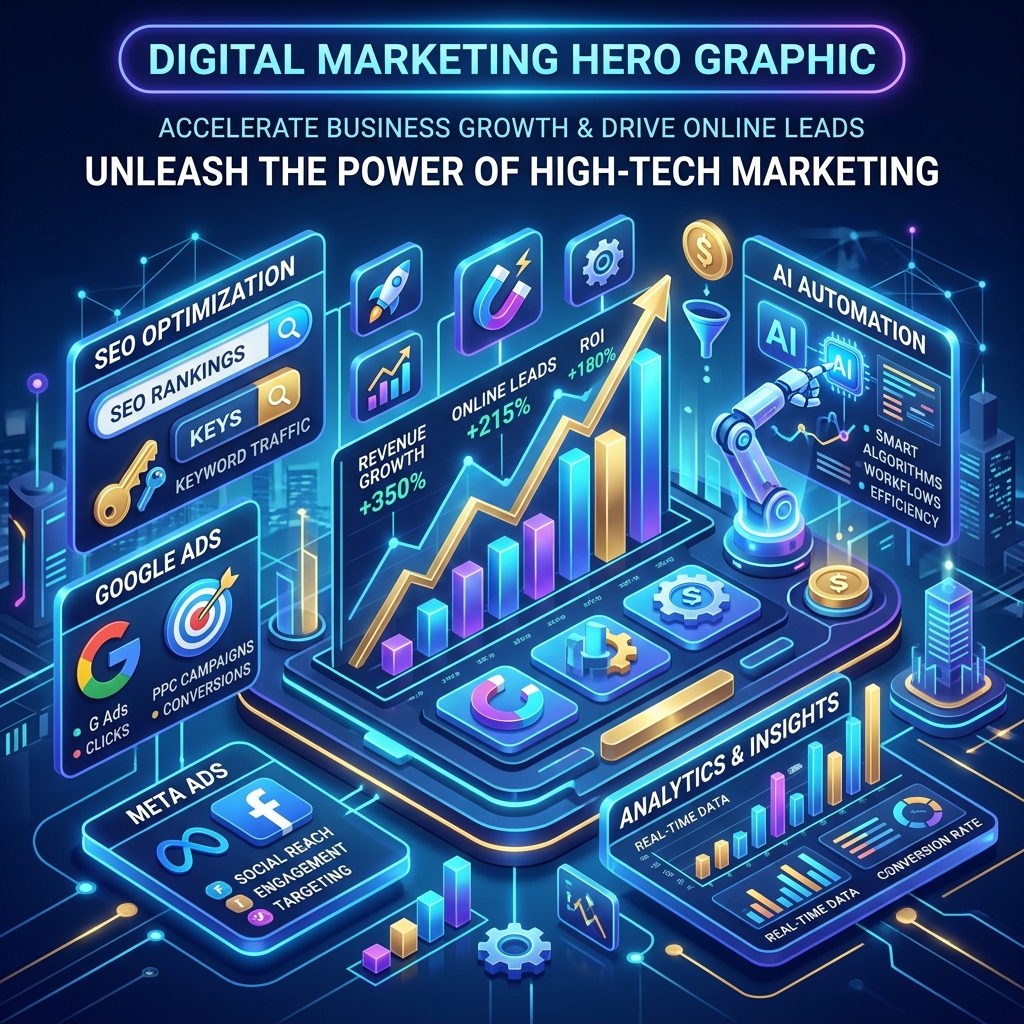
Digital Marketing: How to Get More Leads, Customers & Sales Online
By SoftClinch Consulting Services | 8 min read
Not getting enough leads from your website? Spending money on ads without knowing what is working? Struggling to get your business found on Google?
If you’re searching for ways to get more customers online, generate qualified leads, increase website traffic, improve Google rankings, or grow online sales, digital marketing can help—but only when the strategy is connected to how your customers actually search, compare, and buy.
Today, customers can discover a business through Google Search, social media, advertisements, videos, websites, online reviews, email, WhatsApp, and AI-powered experiences.
!Digital Marketing Channels Matrix
The challenge isn’t simply getting your business online.
The real challenge is:
How do you reach the right customer, at the right time, with the right message—and turn that attention into measurable business growth?
That’s what a results-focused digital marketing strategy should solve.
What Are You Trying to Achieve With Digital Marketing?
Most businesses don’t start by asking for a particular marketing channel. They start with a business problem.
You may be asking:
- How can I get more customers online?
- How can I generate more leads?
- How can I get my website on Google?
- How can I increase website traffic?
- Should I invest in SEO or Google Ads?
- How can I get more enquiries from my website?
- How can I improve my online sales?
- How can I reach customers in my city?
- How can I reduce my cost per lead?
- How can AI improve my marketing?
- How much should I spend on digital marketing?
The answer depends on your business, customers, competition, location, sales cycle, offer, and growth goals.
There is no single channel that is automatically the best for every business.
How Does Digital Marketing Help You Get More Customers?
A strong digital marketing strategy connects different stages of the customer journey.
!Digital Marketing Strategy Funnel
1. Get discovered
Customers can discover your business through:
- Google Search
- Google Maps
- Social media
- Paid advertisements
- YouTube
- Blogs
- Online directories
- Referrals and reviews
- AI-powered search and recommendations
2. Bring the right people to your business
Getting traffic isn’t enough. You need relevant traffic from people who have a genuine need for your product or service.
- SEO can attract people searching organically.
- Google Ads can capture high-intent searches.
- Meta Ads can create demand and reach targeted audiences.
- Content can answer questions before customers are ready to buy.
3. Turn visitors into leads
Once someone reaches your website, landing page, product page, or WhatsApp conversation, the next challenge is conversion.
Your customer should quickly understand:
- What you offer
- Who it is for
- What problem it solves
- Why your business is different
- Why they should trust you
- What they should do next
Your conversion action could be:
Request a Quote → Book a Demo → Call Now → WhatsApp → Enquire Now → Buy Now → Sign Up
4. Follow up
Not every visitor becomes a customer immediately. Some need more information, others compare competitors, some need approval from a decision-maker, and others simply aren’t ready today.
Email marketing, WhatsApp marketing, CRM workflows, remarketing, and automation can help businesses stay connected with potential customers until they are ready to take action.
5. Measure the result
The final objective isn’t just more impressions. It’s:
More qualified leads → More customers → More revenue.
Which Digital Marketing Strategy Is Best for Your Business?
The right strategy depends on where your customers search and how they make buying decisions.
| Business Type | Potential Digital Marketing Focus |
|---|---|
| Local Business | Local SEO + Google Ads + Reviews |
| E-commerce | SEO + Google Ads + Meta Ads + CRO |
| D2C Brand | Meta Ads + Google Ads + Content + Remarketing |
| B2B Business | SEO + Google Ads + Content + Lead Generation |
| Startup | SEO + Paid Ads + Content + Conversion Optimization |
| Professional Services | SEO + Google Ads + Local SEO + Content |
| Education | Search Ads + SEO + Social Media + Lead Follow-Up |
| Real Estate | Google Ads + Meta Ads + Landing Pages + WhatsApp |
| SaaS | SEO + Content + Paid Search + Conversion Optimization |
The best strategy isn’t necessarily the one with the most channels. It’s the one that connects your customer intent to a measurable business outcome.
SEO: How to Get Found on Google Without Paying for Every Click
Search Engine Optimization helps businesses improve their visibility in organic search results.
Customers may search for:
- Best software for small business
- Digital marketing agency near me
- WhatsApp automation software
- SEO services for small business
- How to generate more leads
- Best CRM for e-commerce
- Marketing automation tools
These searches reveal different levels of intent:
- Someone searching “what is SEO?” is learning.
- Someone searching “SEO agency near me” may be ready to contact a provider.
- Someone searching “SEO pricing” is comparing options.
A good SEO strategy understands these differences and creates content for each stage.
Key Components of SEO:
- Keyword research
- Search intent analysis
- On-page SEO
- Technical SEO
- Content strategy
- Internal linking
- Local SEO
- Digital PR and link acquisition
- Conversion optimization
- Search performance analysis
The goal isn’t simply to rank for keywords. The goal is to attract relevant searchers who can become customers.
Google Ads: How to Reach Customers When They Are Ready to Buy
SEO can take time to build. Google Ads can help businesses reach potential customers when they are actively searching for products and services.
For example, “digital marketing agency Chennai” shows stronger commercial intent than “what is digital marketing?”.
Google Ads are useful for:
- Lead generation
- E-commerce sales
- Local businesses
- Service businesses
- SaaS
- High-intent searches
- Remarketing
- Brand protection
But simply running ads doesn’t guarantee results. Performance depends on:
Search Intent + Targeting + Ad Copy + Offer + Landing Page + Conversion Tracking
If your advertisement gets clicks but the landing page doesn’t convince people to enquire, increasing the advertising budget won’t necessarily solve the problem.
Meta Ads: How to Generate Demand on Facebook & Instagram
Google often captures existing demand. Meta Ads can help businesses create and stimulate demand.
People may not be searching for your product yet, but the right advertisement can introduce them to a product, service, offer, solution, new brand, or useful piece of content.
Meta Ads can be used for:
- Lead generation
- E-commerce
- Product promotion
- Retargeting
- Brand awareness
- App promotion
- Local businesses
- Customer acquisition
A strong Meta campaign should connect the advertisement to the next step in the customer journey:
Ad → Landing Page → Lead → Follow-Up → Sale
SEO vs Google Ads: Which One Should You Choose?
This is one of the most important questions businesses ask.
SEO
Best suited for:
- Long-term organic visibility
- Informational searches
- Building topical authority
- Sustainable traffic growth
- Local search visibility
Google Ads
Best suited for:
- Immediate visibility
- High-intent searches
- Lead generation
- Time-sensitive campaigns
- Testing offers and keywords
The Smarter Approach?
For many businesses, it isn’t necessarily SEO vs Google Ads. It can be:
SEO + Google Ads + Conversion Optimization
Paid search can capture immediate demand while SEO builds long-term organic visibility.
How Can Digital Marketing Generate More Leads?
Lead generation is where marketing becomes a measurable business activity.
A typical customer journey could look like:
Google Search
      ↓
Website / Landing Page
      ↓
Lead Form / Call / WhatsApp
      ↓
CRM
      ↓
Email / WhatsApp Follow-Up
      ↓
Sales Team
      ↓
Customer
Digital marketing can generate leads through SEO, Google Ads, Meta Ads, social media, content marketing, landing pages, lead forms, WhatsApp, email marketing, webinars, remarketing, and marketing automation.
However, the number of leads isn’t the only metric that matters. 100 poor-quality leads can be less valuable than 20 highly qualified leads.
How Can You Get More Customers From Your Website?
More website traffic doesn’t automatically mean more sales. Your website needs to answer the questions customers have before they take action.
A high-converting website should make it clear:
- What do you offer? — Explain your product or service in simple language.
- Who is it for? — Help the visitor immediately identify whether your solution fits their needs.
- What problem do you solve? — Focus on the customer’s outcome, not just your features.
- Why should they trust you? — Use reviews, case studies, client logos, testimonials, certifications, results, and demonstrations.
- What should they do next? — Use a clear CTA like Book a Demo, Get a Quote, Talk to an Expert, Start Now, or WhatsApp Us.
The easier it is for a qualified visitor to take action, the greater the opportunity for conversion.
How Can Social Media Help Grow Your Business?
Social media is more than posting regularly. Businesses can use social platforms to:
- Build brand awareness
- Educate customers
- Showcase products
- Generate leads
- Drive website traffic
- Build communities
- Run targeted advertisements
- Retarget website visitors
- Collect customer feedback
- Support customer relationships
The important question isn’t “How many followers do we have?”. Instead ask: “How many relevant people did we reach, how many took action, and how many became customers?”
How Can AI Be Used in Digital Marketing?
AI is changing how businesses approach research, content, advertising, personalization, customer communication, and marketing automation.
Businesses can use AI to support customer research, keyword research, content planning, content creation, SEO analysis, ad copy variations, audience segmentation, lead qualification, customer support, personalization, campaign analysis, reporting, and marketing automation.
But AI alone isn’t a marketing strategy. The strongest approach combines:
Customer Understanding + Human Strategy + Data + AI + Automation
AI can help teams work faster and process more information, but the business still needs a strong offer, clear positioning, accurate customer understanding, and measurable goals.
How Can WhatsApp Support Digital Marketing?
For businesses that generate enquiries through conversations, WhatsApp can become an important part of the customer journey.
Businesses can use WhatsApp for lead follow-up, customer support, product enquiries, appointment reminders, order updates, broadcast campaigns, promotional messages, automated responses, lead qualification, and customer retention.
A customer might discover your business through Google or Instagram and then move to WhatsApp to ask questions:
Search / Ad → Website → WhatsApp → Follow-Up → Sale
The important part is connecting WhatsApp communication with the rest of the marketing and sales funnel.
How Much Does Digital Marketing Cost?
There isn’t one fixed price for digital marketing. Your investment can depend on business size, industry, competition, target market, location, number of channels, SEO requirements, advertising budget, content requirements, website requirements, lead targets, marketing technology, and agency or in-house resources.
You should also distinguish between:
- Marketing Management Cost
- Advertising Spend
- Marketing Tools & Software
The better business question isn’t “How cheap can I make digital marketing?”. It is: “How much does it cost to acquire a qualified customer, and how much revenue does that customer generate?”
How Do You Measure Digital Marketing ROI?
A successful marketing campaign should be measurable. Important metrics include organic traffic, search impressions, click-through rate, website conversions, leads, qualified leads, cost per lead, conversion rate, customer acquisition cost, sales, revenue, return on ad spend (ROAS), and return on investment (ROI).
For example, 10,000 visitors may look impressive, but if they produce only 5 enquiries, the traffic may not be commercially valuable. Another campaign might generate:
1,000 relevant visitors → 100 leads → 20 customers
That campaign could produce a much stronger business outcome. This is why digital marketing should be optimized around business results, not vanity metrics.
What Are the Most Important Digital Marketing Trends in 2026?
Digital marketing continues to change as customers adopt new ways of searching, discovering, comparing, and buying.
Businesses should pay attention to:
- AI-powered marketing: AI is becoming part of research, content, advertising, customer service, analytics, and automation.
- Search beyond traditional Google results: Businesses need content that answers real customer questions clearly and demonstrates expertise.
- First-party data: Businesses increasingly need reliable customer data and permission-based communication to build stronger relationships.
- Marketing automation: Automation can reduce repetitive work across lead follow-ups, customer communication, campaigns, and nurturing.
- Conversational marketing: Customers increasingly expect businesses to answer questions quickly through channels such as WhatsApp and chat.
- Conversion-focused websites: Traffic without conversion is not enough. Websites need to turn relevant visitors into enquiries, purchases, registrations, or conversations.
- Full-funnel measurement: Businesses need to understand the journey from Impression → Click → Visit → Lead → Customer → Revenue.
Digital Marketing for Small Businesses
Small businesses don’t need to use every marketing channel. They need to identify where their customers are most likely to search and focus their resources there.
- Local Business: Google Business Profile + Local SEO + Google Ads + Reviews + WhatsApp
- E-commerce Business: SEO + Google Ads + Meta Ads + Product Content + Remarketing
- B2B Company: SEO + Content + Google Ads + Lead Generation + CRM
The objective should always be: Reach the right audience → Generate qualified demand → Convert leads → Follow up → Close sales → Retain customers.
How to Build a Digital Marketing Strategy
Before launching campaigns, answer these 7 questions:
- Who is your ideal customer? — Define the people most likely to buy from you.
- What are they searching for? — Understand their questions, problems, comparisons, and buying keywords.
- Where do they discover businesses? — Identify whether they use Google, social media, YouTube, marketplaces, WhatsApp, or other channels.
- What makes your business different? — Your marketing cannot compensate for unclear positioning.
- What action should customers take? — Choose a clear conversion goal.
- How will you follow up? — Build a process for leads that don’t buy immediately.
- How will you measure success? — Track qualified leads, customers, acquisition costs, and revenue.
A Simple Digital Marketing Funnel
A complete digital marketing system looks like:
- AWARENESS: SEO → Social Media → Content → Paid Ads
- DISCOVERY: Google → Social → Website → Landing Page
- CONSIDERATION: Content → Reviews → Case Studies → Product Information
- CONVERSION: Form → Call → WhatsApp → Purchase → Demo
- NURTURE: Email → WhatsApp → CRM → Remarketing → Automation
- SALES: Qualified Lead → Sales Conversation → Customer
- RETENTION: Support → Follow-Up → Offers → Repeat Purchase → Referral
This is where different digital marketing channels work together instead of operating as isolated activities.
How to Choose a Digital Marketing Agency
If you’re searching for a digital marketing agency, don’t choose one based only on promises like “We’ll increase your traffic.”
Ask:
- Do they understand your industry?
- Can they explain their strategy clearly?
- Do they understand customer search intent?
- Can they manage both organic and paid acquisition?
- Do they track conversions?
- Can they connect marketing activity to leads and sales?
- Do they provide transparent reporting?
- Do they understand your target market?
- Can they optimize campaigns based on data?
- Do they focus on qualified leads rather than vanity metrics?
A good marketing partner should be able to explain why a strategy is being used, what it is expected to achieve, and how success will be measured.
Frequently Asked Questions About Digital Marketing
What is digital marketing?
Digital marketing is the process of using online channels and digital customer touchpoints to attract, engage, convert, and retain customers.
How can digital marketing help my business?
It can help your business increase online visibility, attract relevant traffic, generate leads, increase sales, communicate with customers, and measure marketing performance.
Which digital marketing strategy is best?
There is no universal strategy. The right combination depends on your audience, industry, competition, location, sales cycle, budget, and business objectives.
Is SEO better than Google Ads?
Neither is universally better. SEO can support long-term organic visibility, while Google Ads can provide immediate visibility for relevant searches. Many businesses benefit from using both.
How long does digital marketing take to produce results?
The timeline depends on the channel. Paid advertising can generate traffic quickly, while SEO and content marketing generally require more time to build sustainable organic visibility.
How much does digital marketing cost?
The cost depends on the channels, competition, market, goals, advertising budget, content requirements, and level of marketing support required.
Can digital marketing generate leads?
Yes. SEO, Google Ads, Meta Ads, content marketing, landing pages, social media, WhatsApp, email, and marketing automation can all contribute to lead generation.
How can AI improve digital marketing?
AI can assist with research, content, personalization, campaign analysis, customer support, lead qualification, automation, and other repetitive marketing activities.
How do I measure digital marketing success?
Measure metrics connected to business outcomes, including qualified leads, conversion rate, cost per lead, customer acquisition cost, sales, revenue, ROAS, and ROI.
Ready to Turn Online Searches Into Real Business Growth?
Your customers are already searching for solutions. The opportunity is to make sure they find your business, understand your value, trust your brand, and have a clear reason to take the next step.
A strong digital marketing strategy brings together SEO + Paid Advertising + Content + Social Media + AI + Automation + Conversion Optimization + Analytics.
But the objective remains simple: Get found. Get leads. Get customers. Grow.
About the Author
SoftClinch Consulting Services is a senior engineering contributor and technology consultant at SoftClinch, focusing on digital marketing implementations.
Need expert solutions?
Discuss how our team can help you automate workflows, integrate SAP systems, customize applications, and accelerate organic visibility.
Schedule ConsultationRelated Articles
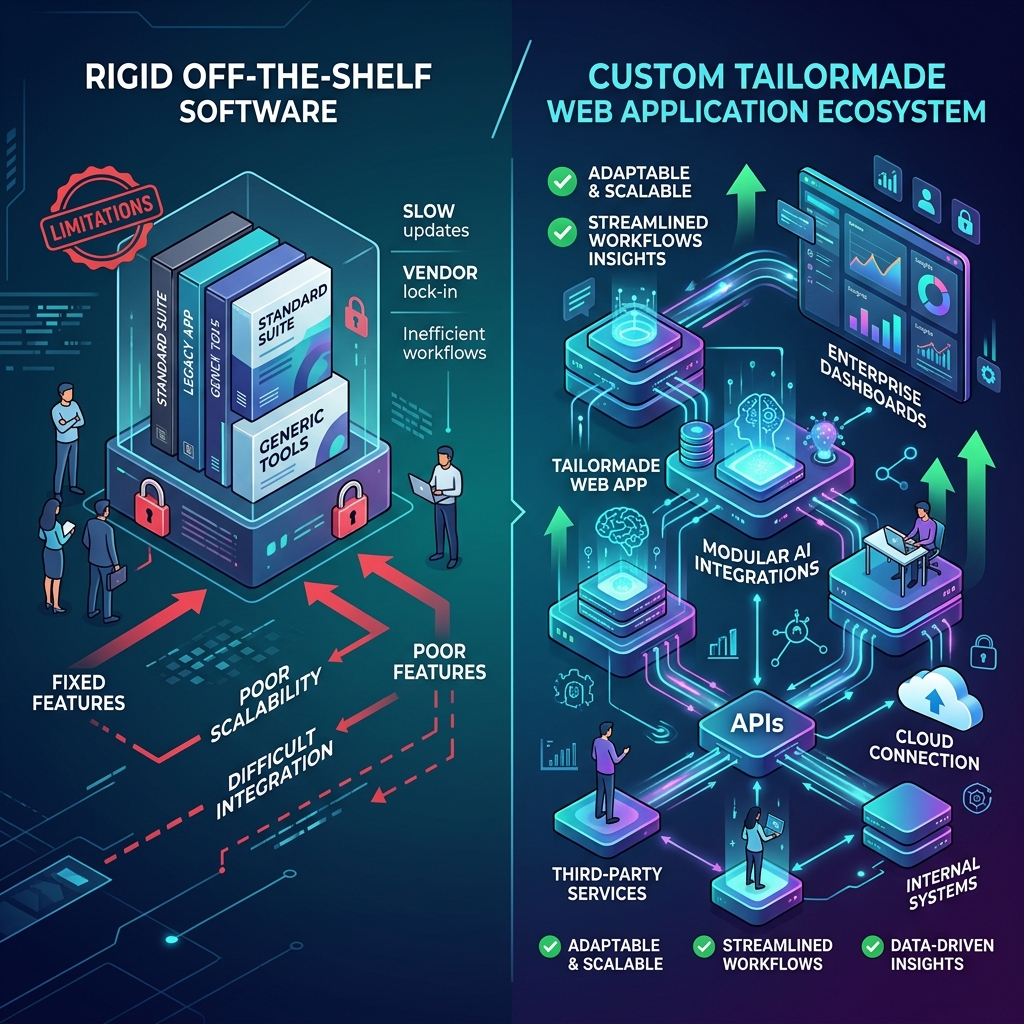
Why Businesses Are Moving from Off-the-Shelf Software to Custom Applications in 2026
Businesses are under constant pressure to work faster and adapt. Learn why organizations are switching from generic off-the-shelf software to custom applications built specifically around their workflows, AI, and growth plans in 2026.
Read MoreDigital Marketing: How to Get More Leads, Customers & Sales Online
Not getting enough leads from your website? Discover how a results-focused digital marketing strategy combining SEO, Google Ads, Meta Ads, AI, and WhatsApp automation turns online search intent into measurable business growth.
Read More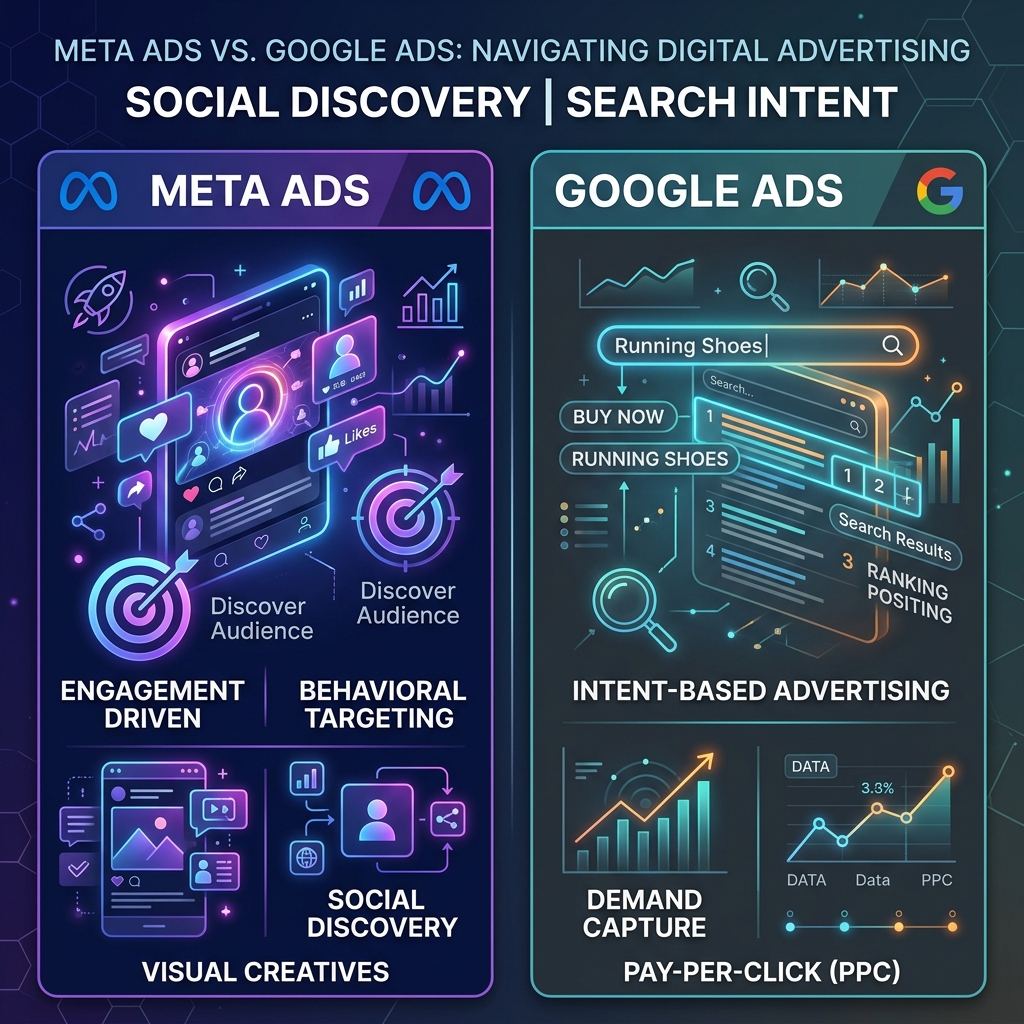
Meta Ads vs Google Ads: Which Advertising Platform Is Right for Your Business?
Choosing the right advertising platform is essential for achieving your marketing goals. Compare Meta Ads and Google Ads based on targeting, cost, intent, and business objectives to find the best fit.
Read More