Why Businesses Are Moving from Off-the-Shelf Software to Custom Applications in 2026
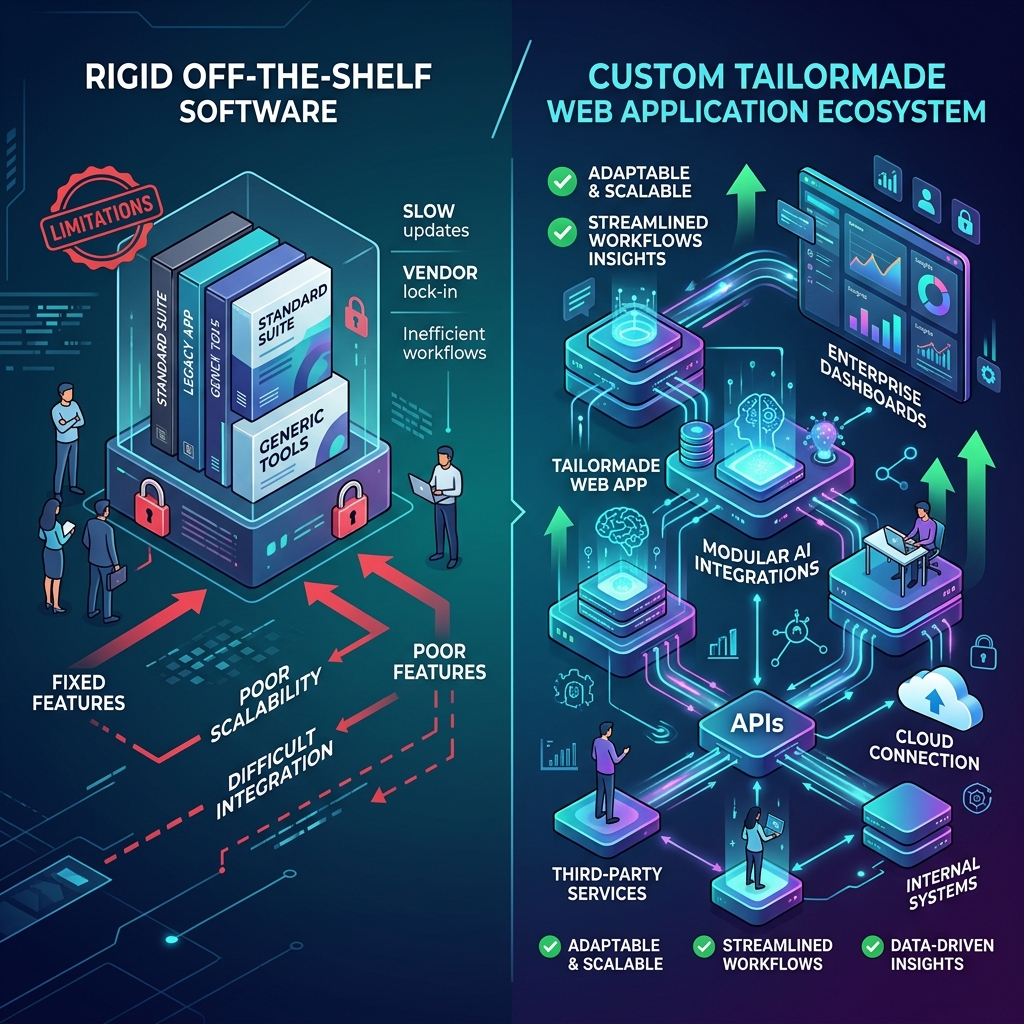
Why Businesses Are Moving from Off-the-Shelf Software to Custom Applications in 2026
By SoftClinch Consulting Services | 8 min read
Businesses today are under constant pressure to work faster, reduce operational costs, improve customer experiences, and adapt to changing market demands. While off-the-shelf software can provide a quick solution for common business needs, many organizations are discovering that standardized software cannot always keep up with their unique processes.
This is one of the reasons custom application development is becoming an increasingly important technology strategy in 2026.
Instead of changing their business processes to fit a software product, businesses are increasingly choosing applications that are designed around their specific workflows, customers, teams, and growth plans.
!Off-the-Shelf vs Custom Software Comparison
What Is Off-the-Shelf Software?
Off-the-shelf software is a ready-made application developed for a broad market. Businesses can purchase or subscribe to it and start using predefined features without building the software from scratch.
Examples include:
- CRM platforms
- Accounting software
- Project management tools
- HR management systems
- E-commerce platforms
- Customer support software
- Marketing automation tools
These solutions can be useful for businesses with standard requirements. However, problems can arise when a company needs workflows, integrations, reporting, or functionality that the software does not provide.
What Is Custom Application Development?
Custom application development involves designing and developing software specifically for a business or organization.
Instead of using the same system as thousands of other companies, the business gets an application designed around its own requirements.
A custom application can include:
- Business-specific workflows
- Custom dashboards
- CRM and ERP integrations
- Payment gateway integrations
- API integrations
- Automated notifications
- Role-based access
- AI-powered features
- Advanced reporting and analytics
- Mobile and web applications
!Custom Application Architecture and Integrations
The objective is not simply to build software. It is to create a technology solution that supports the way the business actually operates.
Why Are Businesses Moving Toward Custom Applications in 2026?
1. Businesses Need Software That Fits Their Processes
Every business has different workflows.
A standard application may require employees to manually move data between different systems, use spreadsheets for additional processes, or create workarounds for tasks the software does not support.
Custom applications can be designed around those workflows.
For example, a logistics company may need a system that connects orders, warehouse operations, drivers, delivery status, customer notifications, and management reporting in one platform.
Instead of managing these processes across multiple applications, a custom system can connect them into a single workflow.
2. Integration Has Become a Business Requirement
Modern businesses rarely operate with one software platform.
They may use:
- CRM systems
- ERP platforms
- Payment gateways
- E-commerce platforms
- Accounting software
- Marketing automation tools
- Communication platforms
- Analytics systems
Custom applications can be developed with APIs and integrations that allow different systems to communicate with each other.
This can reduce duplicate data entry and create a more connected technology environment.
3. Businesses Want Greater Automation
Manual processes consume time and increase the possibility of human error.
!Custom vs Commercial Software Workflow Automation
Custom applications can automate repetitive activities such as:
- Order processing
- Lead assignment
- Customer notifications
- Invoice generation
- Approval workflows
- Data synchronization
- Report generation
- Inventory updates
Automation can help employees spend more time on tasks that require decision-making, customer interaction, and strategic thinking.
4. AI Is Changing Business Applications
AI is becoming an important component of modern business software.
Instead of treating AI as a separate tool, businesses can integrate AI directly into their applications.
For example, a custom application could include:
- AI-powered customer support
- Intelligent search
- Automated document processing
- Predictive analytics
- Recommendation engines
- Lead qualification
- AI-assisted reporting
- Workflow-based AI automation
This allows businesses to build AI around their actual data and processes instead of relying only on generic AI tools.
5. Scalability Matters More Than Ever
A software solution that works for a small business today may not be suitable when the company grows.
Businesses may eventually need:
- More users
- More customers
- More transactions
- Additional locations
- New business processes
- Advanced reporting
- More integrations
Custom applications can be architected with future growth in mind.
This makes scalability an important consideration when choosing between a standard platform and a custom solution.
6. Better Data Visibility and Control
Businesses generate large amounts of operational and customer data.
When information is distributed across multiple systems, obtaining a complete view of business performance can become difficult.
A custom application can bring relevant data into centralized dashboards and reporting systems.
Businesses can define:
- Which data is collected
- How data is processed
- Who can access it
- How information is reported
- Which systems should receive the data
This can improve visibility and support better business decisions.
7. Better Customer Experiences
Customer expectations continue to increase.
Businesses often need technology that provides experiences specific to their customers rather than generic workflows.
Custom applications can support features such as:
- Customer portals
- Personalized dashboards
- Automated notifications
- Self-service functionality
- Customized ordering systems
- Real-time tracking
- Loyalty and engagement features
A more personalized digital experience can help businesses differentiate themselves from competitors.
Off-the-Shelf Software vs Custom Applications
| Factor | Off-the-Shelf Software | Custom Application |
|---|---|---|
| Development | Already developed | Built according to requirements |
| Initial setup | Usually faster | Requires planning and development |
| Customization | Limited to available options | Highly customizable |
| Integrations | Depends on supported integrations | Can be designed for specific integrations |
| Scalability | Depends on the platform | Designed around business growth |
| Workflow flexibility | Limited | High |
| Data control | Depends on provider | Greater control |
| AI capabilities | Depends on provider | Can be integrated around business requirements |
| Long-term flexibility | Platform dependent | Business dependent |
The right choice depends on the organization’s requirements, budget, timeline, and long-term technology strategy.
When Should a Business Consider Custom Application Development?
Custom development may make sense when:
- Existing software requires too many workarounds.
- Multiple systems need to be connected.
- Employees spend significant time on manual processes.
- The business has unique operational workflows.
- Standard software cannot provide required functionality.
- The company needs specialized reporting.
- AI needs to be integrated into internal workflows.
- The organization expects significant growth.
- Customer-facing experiences need to be highly customized.
Businesses do not necessarily need to replace every existing application. In many cases, a custom application can work alongside existing systems through APIs and integrations.
What Types of Custom Applications Can Businesses Build?
Custom application development can support a wide range of business requirements.
Custom CRM Applications
Businesses can build CRM platforms around their specific sales processes, lead management workflows, customer data, and reporting requirements.
E-commerce Applications
Custom e-commerce applications can provide specialized product management, ordering, payment, inventory, customer, and fulfillment workflows.
Enterprise Applications
Large organizations can develop applications for internal operations, employee management, approvals, reporting, and department-level workflows.
Customer Portals
Customer portals can provide access to orders, invoices, service requests, documents, support tickets, account information, and other services.
Logistics and Delivery Applications
Businesses can connect order management, warehouse operations, delivery teams, tracking, customer communication, and reporting within one system.
AI-Powered Business Applications
Organizations can integrate AI into applications to automate support, analyze information, generate insights, and assist employees with repetitive tasks.
Is Custom Application Development More Expensive?
Custom application development can require a larger initial investment than purchasing an off-the-shelf subscription.
However, the initial development cost is only one part of the decision.
Businesses should also consider the long-term cost of:
- Multiple software subscriptions
- Manual processes
- Duplicate data entry
- Additional third-party tools
- Integration limitations
- Employee productivity losses
- Software customization charges
- Platform limitations
For businesses with complex or specialized requirements, a custom application can provide greater long-term value by bringing important workflows into a solution designed specifically for the organization.
How SoftClinch Consulting Services Can Help
SoftClinch Consulting Services helps businesses transform their technology requirements into practical digital solutions.
Our custom application development approach focuses on understanding the business before building the technology.
We can help with:
- Business and application requirement analysis
- UI/UX planning
- Custom web application development
- Mobile application development
- API development and integrations
- CRM and ERP integrations
- E-commerce application development
- Workflow automation
- AI-powered application development
- Database and backend development
- Testing and deployment
- Application maintenance and support
The goal is to create applications that solve real business problems rather than simply adding another software product to the technology stack.
Conclusion
The shift from off-the-shelf software to custom applications is not about replacing every standard software platform.
It is about recognizing when a business has reached the limits of generic solutions.
As businesses become more digital, interconnected, and automation-driven in 2026, the ability to build software around specific processes can become a significant competitive advantage.
For organizations struggling with disconnected systems, manual workflows, limited integrations, or software that cannot adapt to their requirements, custom application development can provide a more flexible path toward long-term digital growth.
If your business has a process that existing software cannot handle efficiently, SoftClinch Consulting Services can help you explore and develop a custom application built around your requirements.
About the Author
SoftClinch Consulting Services is a senior engineering contributor and technology consultant at SoftClinch, focusing on custom development implementations.
Need expert solutions?
Discuss how our team can help you automate workflows, integrate SAP systems, customize applications, and accelerate organic visibility.
Schedule ConsultationRelated Articles
Why Businesses Are Moving from Off-the-Shelf Software to Custom Applications in 2026
Businesses are under constant pressure to work faster and adapt. Learn why organizations are switching from generic off-the-shelf software to custom applications built specifically around their workflows, AI, and growth plans in 2026.
Read More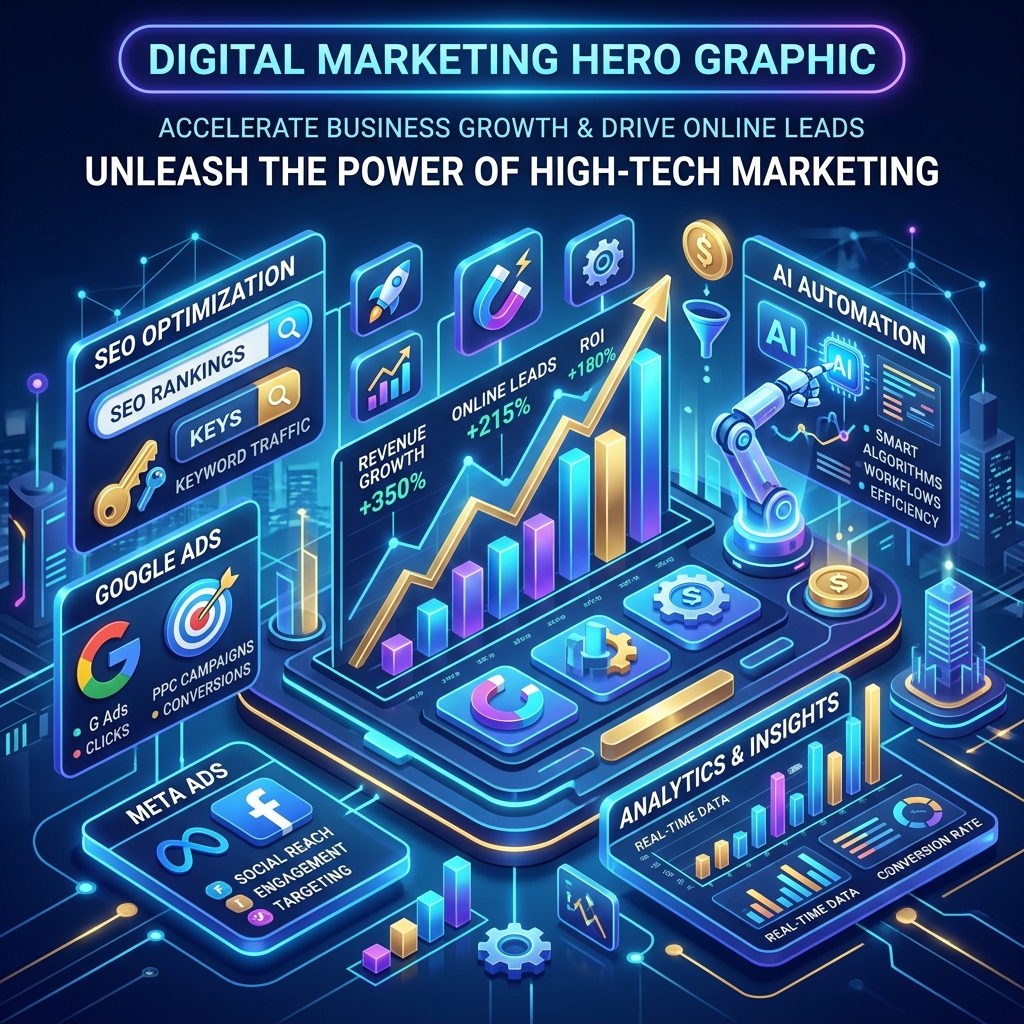
Digital Marketing: How to Get More Leads, Customers & Sales Online
Not getting enough leads from your website? Discover how a results-focused digital marketing strategy combining SEO, Google Ads, Meta Ads, AI, and WhatsApp automation turns online search intent into measurable business growth.
Read More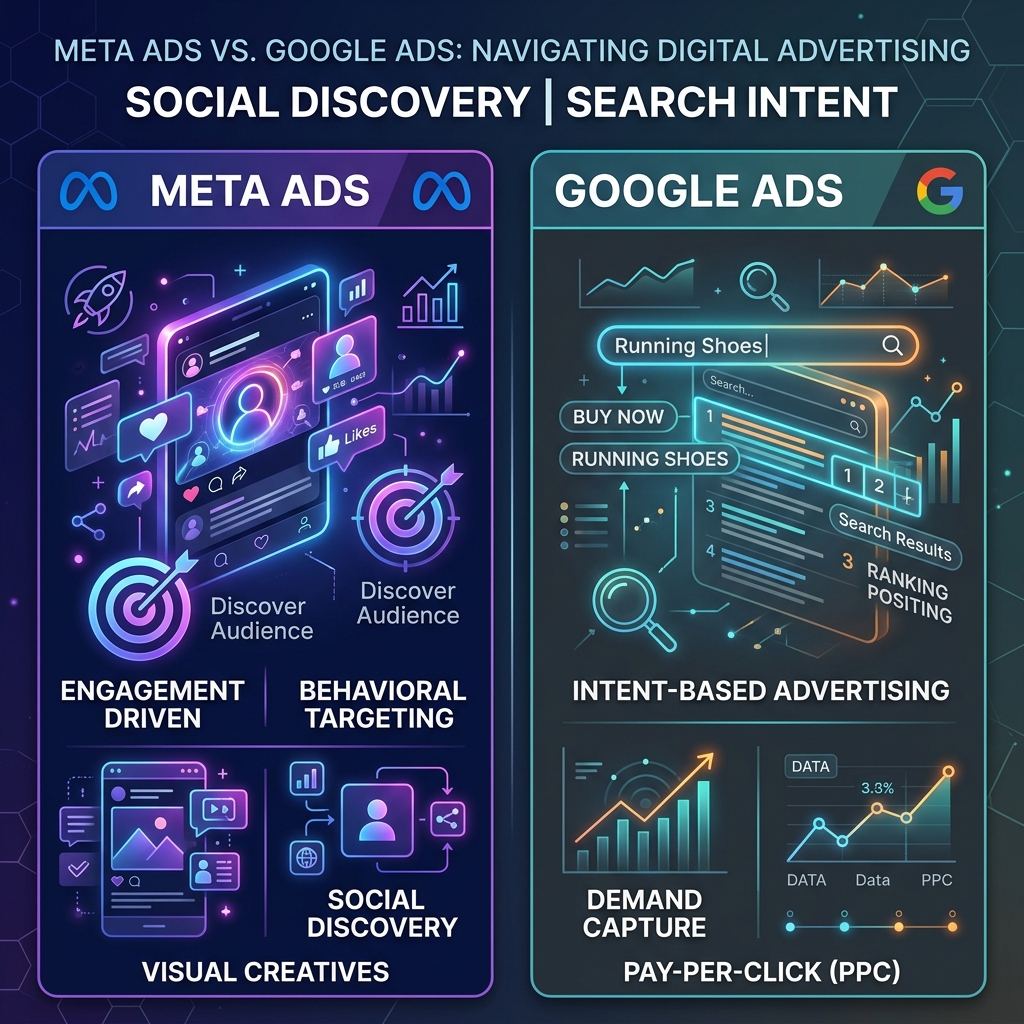
Meta Ads vs Google Ads: Which Advertising Platform Is Right for Your Business?
Choosing the right advertising platform is essential for achieving your marketing goals. Compare Meta Ads and Google Ads based on targeting, cost, intent, and business objectives to find the best fit.
Read More