Google’s New AI Search Feature: What It Changes for Business Websites
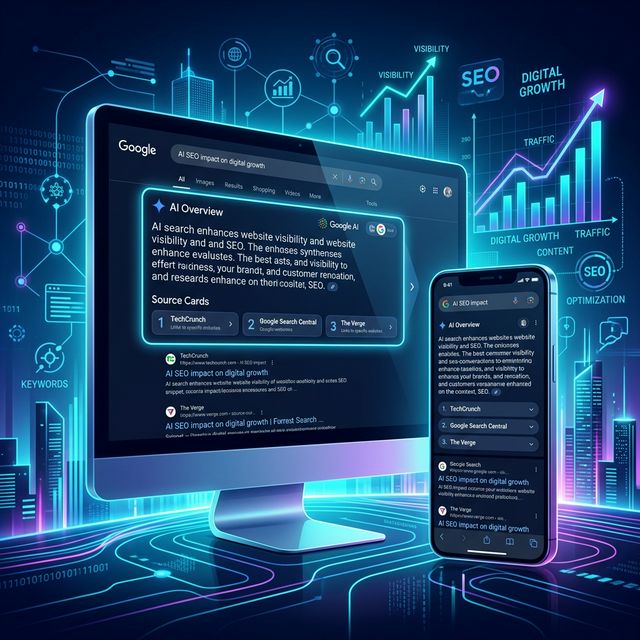
Google’s New AI Search Feature: What It Changes for Business Websites
By SoftClinch Consulting Services | 9 min read
Google AI Search is changing how customers discover information, businesses and products online. Here’s what businesses should understand about AI search, SEO and their website strategy.
!Google AI Search Feature for Business Websites
Google Search Is Changing
Google Search is moving beyond a simple list of blue links.
With AI-powered search experiences, users can increasingly ask more conversational questions, explore related topics and receive summarized information before visiting individual websites.
For businesses, this creates an important question:
If customers can get answers directly from Google, what happens to your website?
The answer isn't to abandon SEO.
Instead, businesses need to think about how their website content can be discovered, understood, trusted and used across changing search experiences.
What Is Changing in Google Search?
Traditional search generally follows this journey:
Search → Results → Website → Information
AI-assisted search can introduce another layer:
Search → AI-generated understanding → Sources → Website / Action
!Traditional Search vs AI Search Journey
This changes the way people may research products, services and businesses.
For example, someone might search:
“What is the best eCommerce platform for a growing business?”
Instead of simply looking through several results, an AI-assisted search experience may help the user compare:
- Features
- Pricing
- Use cases
- Advantages
- Limitations
- Business suitability
The customer's first interaction with a business can therefore happen before they visit its website.
That makes the quality and structure of your online information increasingly important.
Why Does AI Search Matter for Business Websites?
Your website is no longer only a destination that people visit after clicking a search result.
It can also act as a source of information that search systems use to understand your business.
Search engines need to understand:
- What your business does
- Who your services are for
- What problems you solve
- What makes your offering different
- Whether your information is trustworthy
- Whether your website provides a useful experience
This means businesses should focus on creating content that is:
Clear + Useful + Structured + Relevant + Trustworthy
What Does This Mean for SEO?
AI Search does not make traditional SEO irrelevant.
- Technical SEO still matters.
- Content quality still matters.
- Website performance still matters.
- Internal linking still matters.
- Authority and credibility still matter.
What is changing is the search journey.
Businesses should no longer think only about:
“What keyword should we rank for?”
They should also ask:
“What information does a customer need before making a decision?”
For example, instead of creating a generic page targeting Digital Marketing Services, a business could answer questions such as:
- How much does digital marketing cost?
- Which digital marketing channels are useful for my business?
- How long does SEO take?
- What should I check before spending more on Google Ads?
These questions are closer to actual customer decision-making.
5 Things Businesses Should Check
1. Is Your Content Answering Real Customer Questions?
Start with your customers, not just keywords.
Think about the questions your sales and support teams receive repeatedly.
These questions can become:
- Blog articles
- FAQs
- Service-page sections
- Comparison pages
- Guides
- Case studies
Useful content should help a customer make progress.
Don't create content simply because a keyword has search volume. Create it because someone has a real information need.
2. Can Search Engines Understand Your Website?
Your website should communicate its purpose clearly.
Review:
- Page titles
- H1 and H2 headings
- Internal links
- Navigation
- Structured data
- Service descriptions
- Product information
- Business information
- Image alt text
- Indexability
A website can look visually impressive while still having a weak information structure.
Good website engineering and good SEO should therefore work together.
3. Is Your Content Actually Useful?
AI has made content creation much easier. That also means the internet is becoming increasingly crowded with similar articles.
Publishing another generic article isn't enough. Businesses should add:
- Experience
- Examples
- Original insights
- Data
- Practical recommendations
- Real business scenarios
Instead of: “What is SEO?”, consider: “What We Check When Auditing a Business Website for SEO and Conversion.”
The second topic demonstrates practical knowledge rather than simply defining a term.
4. Don’t Forget the Website Experience
Getting discovered is only the beginning.
Once someone reaches your website, what happens?
Can they immediately understand:
- What you offer?
- Who it's for?
- Why they should trust you?
- What should they do next?
A poor experience can turn search visibility into wasted traffic.
Think about the complete journey:
Search → Discovery → Website → Understanding → Trust → Action → Lead / Enquiry / Purchase
SEO and conversion optimization should therefore work together.
5. Think Beyond Traditional Rankings
Ranking on Google remains important. But modern search visibility is broader than one keyword position.
Customers can discover businesses through:
- Traditional search
- AI-assisted search
- Local results
- Product results
- Business profiles
- YouTube
- Social platforms
- Reviews
- Industry websites
- Third-party sources
The question is increasingly: Where can customers discover your business when they are looking for a solution?
That is a broader digital visibility problem.
SEO + GEO + AEO: A Broader Search Strategy
Businesses are increasingly hearing terms such as SEO, AEO and GEO.
!SEO GEO AEO Broader Search Strategy
SEO — Search Engine Optimization
Improving your website's visibility and performance in traditional search engines.
AEO — Answer Engine Optimization
Structuring content to provide clear answers to specific questions and search intent.
GEO — Generative Engine Optimization
Improving how your brand and content can be discovered and represented in generative AI-driven search experiences.
These shouldn't be treated as completely separate strategies. They share the same foundation:
- Useful content
- Strong website structure
- Technical quality
- Credibility
- Good user experience
What Should Businesses Do Now?
You don't need to rebuild your entire website just because search is changing. Start with an audit.
Content
- Are important pages answering customer questions?
- Is your content original and useful?
- Are service pages detailed enough?
- Are old pages still accurate?
Technical SEO
- Can search engines crawl your website?
- Are important pages indexable?
- Is your website mobile-friendly?
- Are pages loading efficiently?
- Is your internal linking logical?
Website Experience
- Can visitors understand your offering quickly?
- Are important actions easy to find?
- Are forms simple?
- Does the website work properly on mobile?
Business Credibility
- Is your company information clear?
- Are your services explained accurately?
- Do you have case studies or proof points?
- Are your business details consistent?
Search Strategy
- Which queries bring qualified visitors?
- Which pages generate enquiries?
- Are branded searches growing?
- Are non-branded searches generating relevant traffic?
- Are you monitoring changes in organic visibility?
AI Search Is Making Search More Conversational
One of the biggest changes isn't necessarily a single Google feature. It's the movement from:
“Find me a website.” → “Help me solve this problem.”
A customer might start with:
- “How can I improve my online store?”
- Then ask: “Which platform should I use?”
- Then: “How much will it cost?”
- Then: “Which company can help me?”
The search journey becomes more conversational.
This creates an opportunity for businesses that consistently provide useful information throughout that journey.
What This Means for Businesses in Chennai and Beyond
For businesses competing in local markets such as Chennai and across Tamil Nadu, search visibility is becoming increasingly important.
A potential customer might search for:
- SEO company in Chennai
- Digital marketing company in Chennai
- eCommerce development company
- Website development company
- Custom software company
- AI automation services
The businesses that appear across relevant searches need more than a homepage.
They need a digital presence that clearly communicates:
Who they are → What they do → Who they help → Why they are credible → How customers can take the next step
Local SEO should therefore be connected with broader website, content and conversion strategies.
How SoftClinch Approaches Search and Digital Growth
At SoftClinch, we look at digital growth as a connected system rather than a collection of isolated services.
!SoftClinch Connected Digital Growth System
A strong digital presence involves:
Website Engineering → SEO → Content → GEO / AEO → Performance Marketing → User Experience → Conversion → Business Growth
This is why SEO should not operate separately from website engineering, performance, CRO, analytics and digital strategy.
As search evolves, businesses need a digital foundation that can evolve with it.
Final Thoughts
Google's AI-powered search developments are another signal that the way people discover businesses online is changing.
The answer isn't to abandon traditional SEO. It is to build a stronger digital foundation.
- Create useful content.
- Answer real customer questions.
- Make your website technically sound.
- Build credibility.
- Improve the user experience.
- And measure what happens after the click.
Because the future of search isn't simply about ranking higher. It's about being Discovered. Understood. Trusted.
Frequently Asked Questions
Will AI Search Replace SEO?
No. AI-powered search changes how information can be presented and distinguished, but traditional SEO remains an important foundation for online visibility.
Is AI SEO Different From Traditional SEO?
AI SEO focuses more heavily on preparing content and website information for AI-assisted discovery while still relying on many established SEO fundamentals.
What Is AI Search Optimization?
AI Search Optimization focuses on making website information clear, structured and useful for AI-driven search and discovery experiences.
Is GEO the Same as SEO?
No. SEO primarily focuses on traditional search-engine visibility, while GEO focuses on visibility within generative AI experiences. However, both rely on strong content, technical quality and credibility.
Should a Business Redesign Its Website Because of AI Search?
Not automatically. Businesses should first audit their content, technical SEO, website experience and conversion journey, then make improvements based on actual business needs.
About SoftClinch
SoftClinch is an engineering-led digital transformation company helping businesses build stronger digital systems and growth experiences.
Our capabilities include SEO, GEO, AEO, performance marketing, custom applications, eCommerce, automation and digital transformation.
About the Author
SoftClinch Consulting Services is a senior engineering contributor and technology consultant at SoftClinch, focusing on digital marketing implementations.
Need expert solutions?
Discuss how our team can help you automate workflows, integrate SAP systems, customize applications, and accelerate organic visibility.
Schedule ConsultationRelated Articles
Google’s New AI Search Feature: What It Changes for Business Websites
Google AI Search is changing how customers discover information, businesses and products online. Here’s what businesses should understand about AI search, SEO and their website strategy.
Read More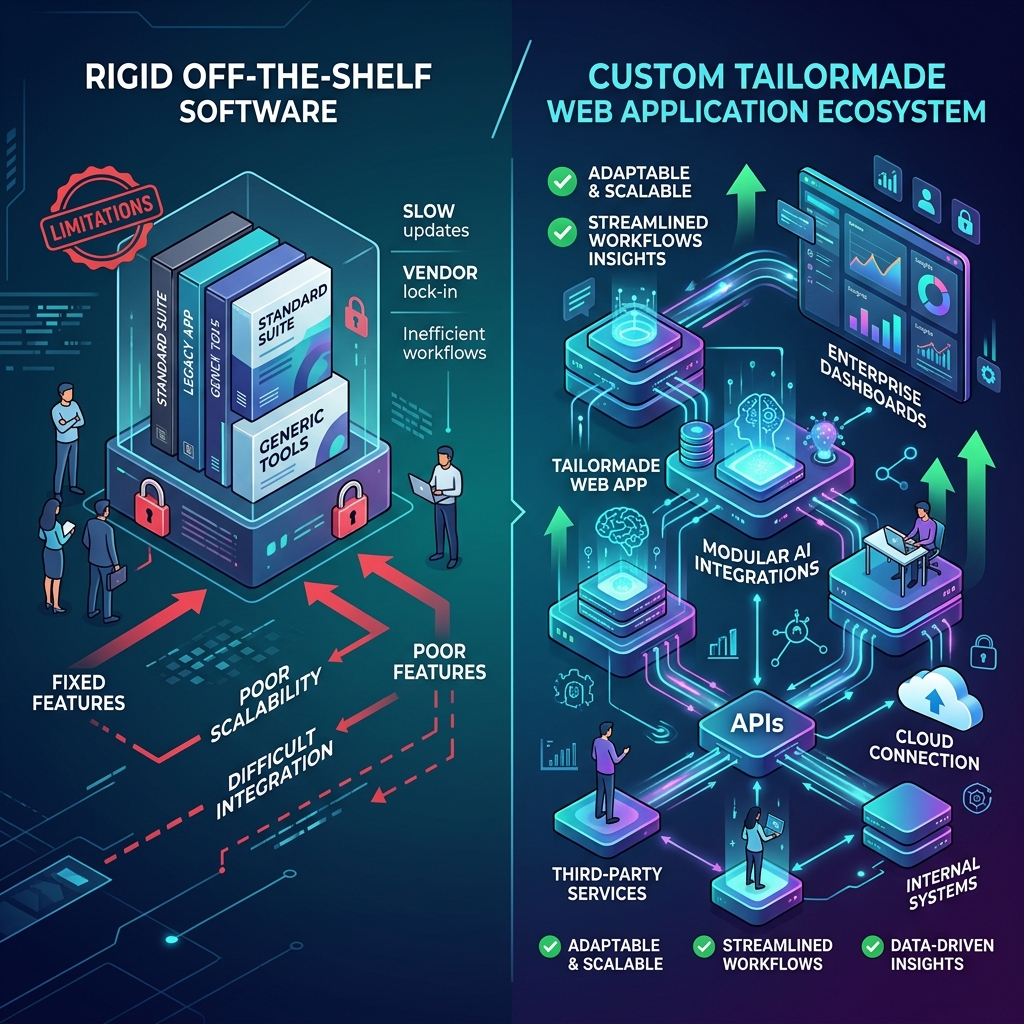
Why Businesses Are Moving from Off-the-Shelf Software to Custom Applications in 2026
Businesses are under constant pressure to work faster and adapt. Learn why organizations are switching from generic off-the-shelf software to custom applications built specifically around their workflows, AI, and growth plans in 2026.
Read More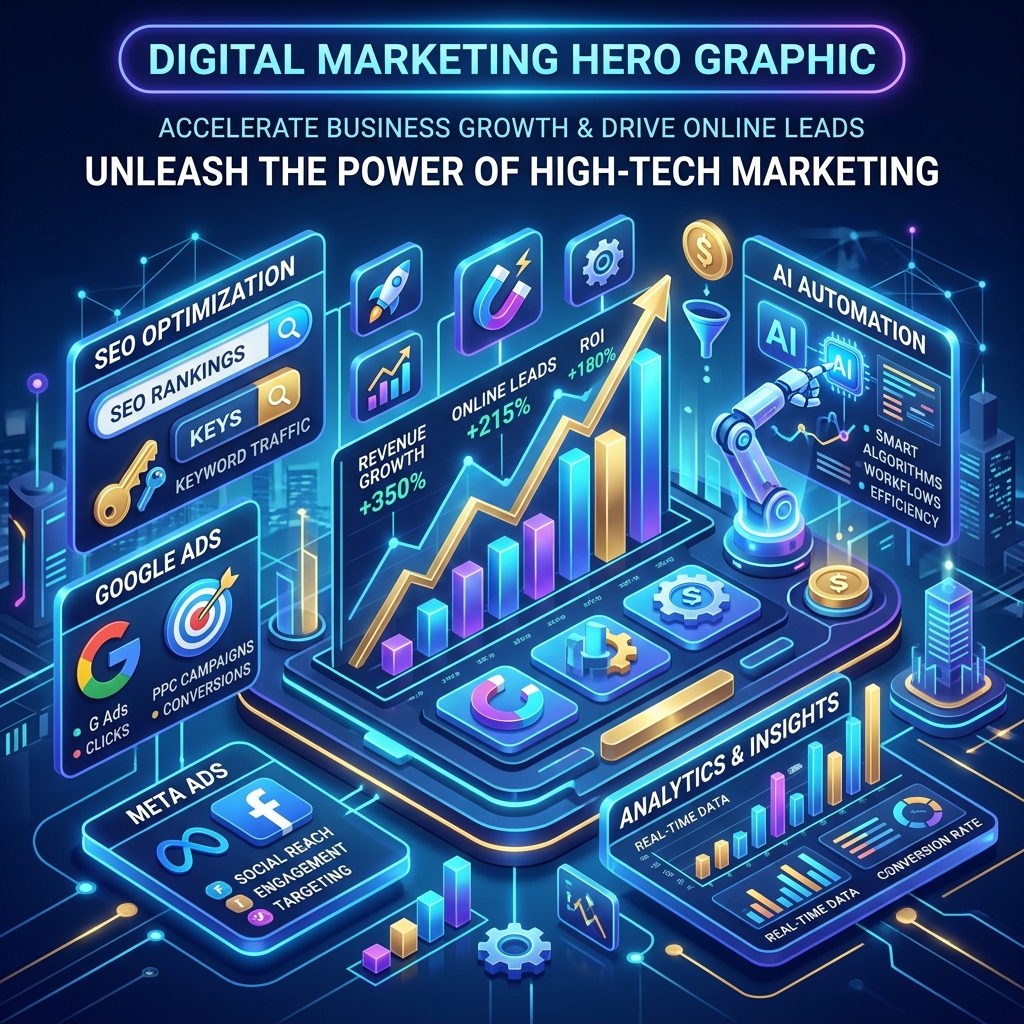
Digital Marketing: How to Get More Leads, Customers & Sales Online
Not getting enough leads from your website? Discover how a results-focused digital marketing strategy combining SEO, Google Ads, Meta Ads, AI, and WhatsApp automation turns online search intent into measurable business growth.
Read More