Meta Ads vs Google Ads: Which Advertising Platform Is Right for Your Business?
Meta Ads vs Google Ads: Which Advertising Platform Is Right for Your Business?
By SoftClinch Consulting Services | 7 min read
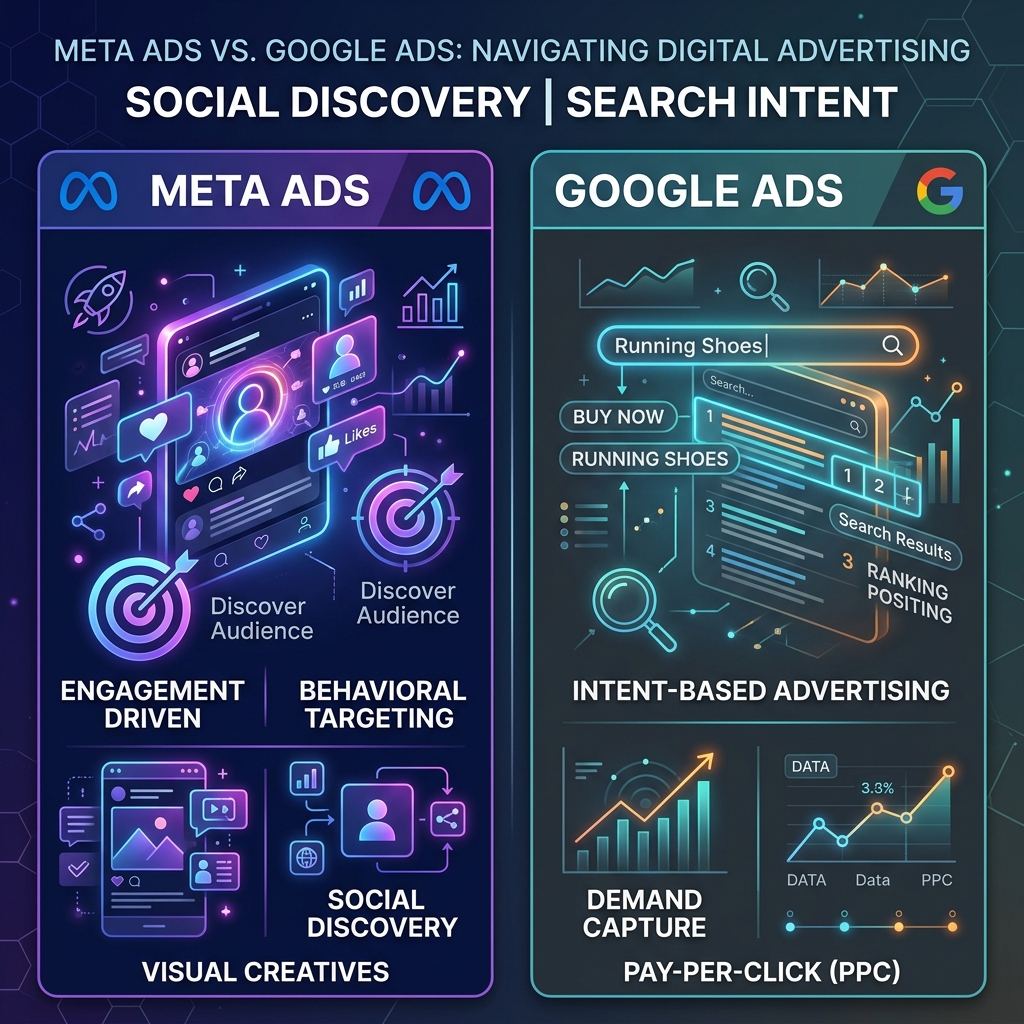
Choosing the right advertising platform is essential for achieving your marketing goals. Meta Ads and Google Ads are two of the most powerful digital advertising platforms, but they serve different purposes. While Meta Ads help businesses build brand awareness and engage audiences, Google Ads connect businesses with customers actively searching for products or services.
Understanding the strengths of each platform can help you invest your advertising budget more effectively.
What are Meta Ads?
Meta Ads allow businesses to advertise on Facebook, Instagram, Messenger, and the Meta Audience Network. These ads are shown based on users' interests, demographics, behaviors, and online activity.
Best for:
- Brand awareness
- Product discovery
- Social media engagement
- Lead generation
- E-commerce promotions
What are Google Ads?
Google Ads enables businesses to advertise across Google Search, YouTube, Google Display Network, Gmail, and Google Maps. Ads are triggered by search keywords, making them highly effective for reaching users with purchase intent.
Best for:
- Search-based marketing
- Website traffic
- Qualified leads
- Local businesses
- Online sales
Meta Ads vs Google Ads: Comparison Table
| Feature | Meta Ads | Google Ads |
|---|---|---|
| Platform | Facebook, Instagram, Messenger | Google Search, YouTube, Display Network |
| Audience Type | Interest-based | Search intent-based |
| Targeting | Interests, demographics, behaviors | Keywords, location, device, audience |
| User Intent | Discovering products | Searching for products or services |
| Best Objective | Brand awareness & engagement | Leads & conversions |
| Ad Formats | Image, Video, Carousel, Stories, Reels | Search, Display, Shopping, Video, Performance Max |
| Cost Per Click (CPC) | Usually lower | Usually higher |
| Conversion Speed | Medium | High |
| Remarketing | Excellent | Excellent |
| Learning Curve | Easy to moderate | Moderate to advanced |
Which Platform Should You Use?
Choose Meta Ads if you want to:
- Build brand awareness
- Reach new audiences
- Promote visually attractive products
- Increase social media followers
- Generate engagement
- Launch new products
- Run seasonal promotions
Ideal Industries:
- Fashion
- Beauty
- Restaurants
- Fitness
- Interior Design
- E-commerce
- Lifestyle Brands
Choose Google Ads if you want to:
- Generate qualified leads
- Increase website enquiries
- Capture customers searching online
- Promote professional services
- Drive immediate sales
- Target local customers
Ideal Industries:
- Healthcare
- Education
- Real Estate
- SaaS
- Legal Services
- Financial Services
- Home Services
Advertising Style Comparison
| Meta Ads | Google Ads |
|---|---|
| Discovery Marketing | Intent Marketing |
| Visual Content | Text & Search-Based |
| Social Media Experience | Search Engine Experience |
| Creates Demand | Captures Existing Demand |
| Emotional Buying | Problem-Solving Buying |
Which Platform is Better for Different Goals?
| Business Goal | Recommended Platform |
|---|---|
| Brand Awareness | ✅ Meta Ads |
| Lead Generation | ✅ Google Ads |
| Website Traffic | ✅ Google Ads |
| Social Media Growth | ✅ Meta Ads |
| Product Launch | ✅ Meta Ads |
| Local Business Promotion | ✅ Google Ads |
| Online Store Sales | ✅ Meta + Google |
| App Promotion | ✅ Both |
| Remarketing | ✅ Both |
Can You Use Both Together?
Yes. Many successful businesses combine both platforms to maximize results.
Meta Ads introduce your brand to potential customers and build awareness. Google Ads capture customers when they actively search for your products or services.
Using both platforms creates a complete marketing funnel—from awareness to conversion.
Conclusion
There is no one-size-fits-all answer when choosing between Meta Ads and Google Ads. The right platform depends on your business goals, target audience, and marketing strategy.
Choose Meta Ads to build awareness, engage audiences, and promote visually appealing products. Choose Google Ads to reach customers with high purchase intent and generate qualified leads.
For businesses looking to achieve long-term growth, combining both platforms often delivers the strongest return on investment.
Frequently Asked Questions
1. Which is better for beginners: Meta Ads or Google Ads?
Meta Ads are generally easier to start with for brand awareness campaigns, while Google Ads require keyword research and campaign optimization.
2. Which platform generates more leads?
Google Ads typically generates higher-quality leads because users are actively searching for products or services.
3. Are Meta Ads cheaper than Google Ads?
In many industries, Meta Ads have a lower average cost per click, but overall costs depend on your audience, competition, and campaign quality.
4. Can I use both Meta Ads and Google Ads together?
Yes. Using both platforms helps businesses build brand awareness through Meta Ads and capture high-intent customers through Google Ads.
5. Which platform is best for e-commerce?
A combination of Meta Ads for product discovery and Google Ads for search and shopping campaigns usually provides the best results.
About the Author
SoftClinch Consulting Services is a senior engineering contributor and technology consultant at SoftClinch, focusing on digital marketing implementations.
Need expert solutions?
Discuss how our team can help you automate workflows, integrate SAP systems, customize applications, and accelerate organic visibility.
Schedule ConsultationRelated Articles

Why Businesses Are Moving from Off-the-Shelf Software to Custom Applications in 2026
Businesses are under constant pressure to work faster and adapt. Learn why organizations are switching from generic off-the-shelf software to custom applications built specifically around their workflows, AI, and growth plans in 2026.
Read More
Digital Marketing: How to Get More Leads, Customers & Sales Online
Not getting enough leads from your website? Discover how a results-focused digital marketing strategy combining SEO, Google Ads, Meta Ads, AI, and WhatsApp automation turns online search intent into measurable business growth.
Read MoreMeta Ads vs Google Ads: Which Advertising Platform Is Right for Your Business?
Choosing the right advertising platform is essential for achieving your marketing goals. Compare Meta Ads and Google Ads based on targeting, cost, intent, and business objectives to find the best fit.
Read More