
The Future of Business Growth: How SAP, AI, Custom Applications, SEO, and Digital Marketing Are Reshaping Modern Enterprises
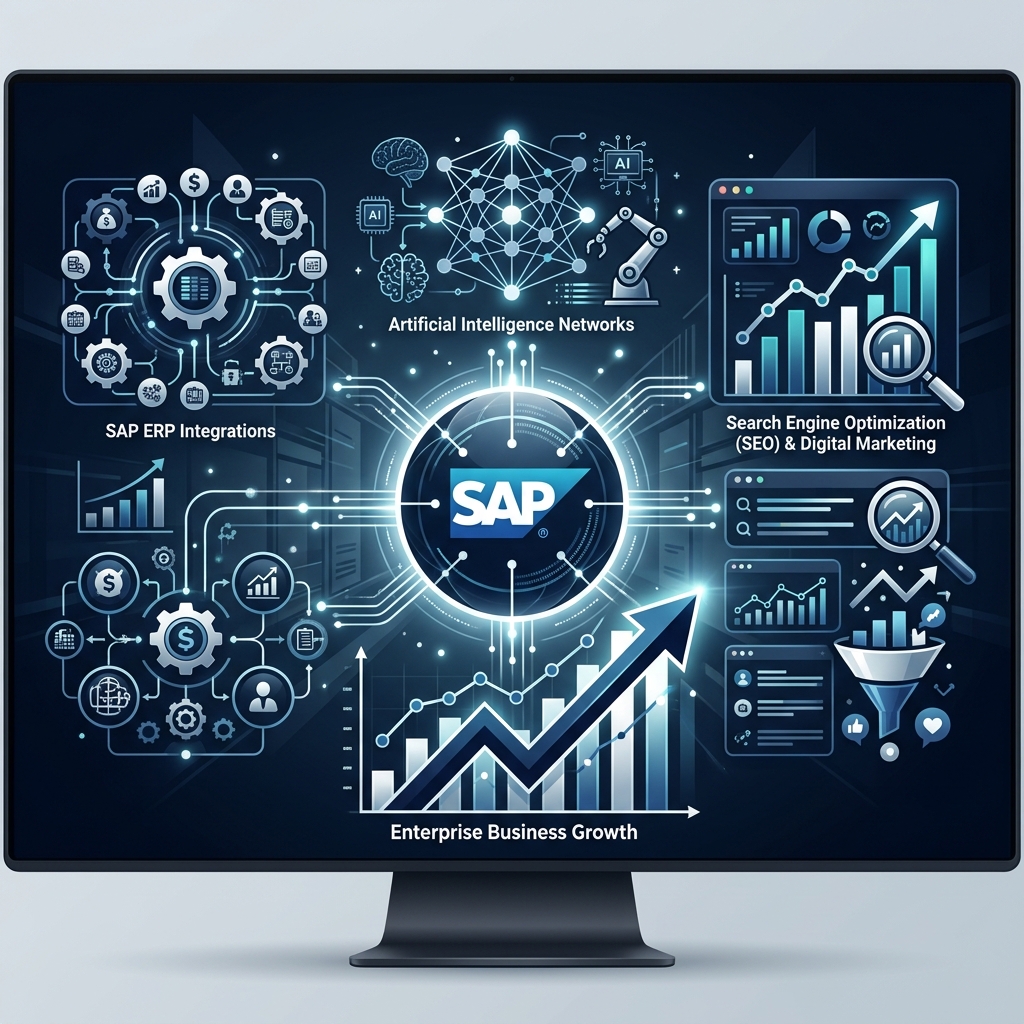
The Future of Business Growth: How SAP, AI, Custom Applications, SEO, and Digital Marketing Are Reshaping Modern Enterprises
Businesses today are operating in one of the most competitive digital environments ever. Customer expectations are increasing, technology cycles are becoming shorter, and companies are under constant pressure to improve efficiency while maintaining growth.
Many organizations still rely on disconnected systems, manual workflows, fragmented communication, and traditional marketing approaches. These limitations reduce speed, increase operational costs, and slow decision-making.
The businesses growing faster today are adopting an integrated strategy built around:
- Enterprise technology platforms
- Intelligent automation
- Custom applications
- Search visibility
- Data-driven digital marketing
This is where technology consulting and execution become critical. This article explores how SAP, AI, custom development, SEO, social media management, and digital transformation work together to create sustainable business growth.
Why Traditional Business Models Are No Longer Enough
A few years ago, having software and a website was often enough. Today businesses need:
- ✔ Connected systems
- ✔ Real-time insights
- ✔ Automated workflows
- ✔ Personalized customer experiences
- ✔ Faster execution
Without these capabilities, organizations often experience:
- Slow operations
- Poor data visibility
- Higher manual effort
- Lower customer retention
- Reduced scalability
Technology has become a growth infrastructure—not simply an operational tool.
SAP: Creating a Connected Enterprise Environment
What Is SAP?
SAP is an enterprise management platform designed to integrate core business operations into a single ecosystem. Instead of separate tools for finance, operations, inventory, procurement, and reporting, SAP centralizes business activities.
Why Businesses Invest in SAP
Companies adopt SAP because it helps improve:
- Operational Visibility: Decision-makers gain access to real-time business information.
- Process Standardization: Teams work through unified workflows.
- Data Accuracy: Centralized systems reduce duplication.
- Scalability: Businesses can expand operations without rebuilding processes.
Example Use Case
A growing manufacturing company may operate:
- Separate accounting tools
- Manual approvals
- Spreadsheet reporting
By implementing SAP:
- Data becomes centralized
- Reporting becomes automated
- Teams operate more efficiently
How AI Is Transforming Enterprise Operations
Artificial intelligence has moved from experimentation into daily business execution. Organizations now use AI to automate repetitive tasks, improve forecasting, and enhance customer interactions.
Areas Where AI Creates Business Value
- Process Automation: AI automates data entry, approvals, customer interactions, and documentation.
- Predictive Analytics: AI helps businesses forecast demand, identify trends, and improve planning.
- Intelligent Customer Experience: AI supports personalized communication, faster support, and better engagement.
Benefits of AI Adoption
Businesses commonly experience:
- Faster execution
- Reduced operational costs
- Improved customer experience
- Better resource utilization
Why Custom Applications Are Becoming a Competitive Advantage
Off-the-shelf software often creates limitations. Custom applications are built specifically around business operations.
What Makes Custom Applications Valuable
- Flexibility: Applications adapt to business processes.
- Integration: Systems connect more effectively.
- Scalability: Features expand as business grows.
Common Custom Application Examples
- CRM systems
- Internal dashboards
- Customer portals
- Workflow management platforms
- Automation systems
Business Impact
Custom solutions reduce friction and improve productivity.
SEO Has Evolved Beyond Rankings
Search optimization is no longer only about keywords. Businesses now compete across search engines, AI platforms, and answer engines.
Modern Search Strategy Includes
- SEO (Search Engine Optimization): Improves traditional rankings.
- GEO (Generative Engine Optimization): Improves visibility inside AI-generated responses.
- AEO (Answer Engine Optimization): Optimizes for direct answers.
Why Search Visibility Matters
High search visibility helps businesses:
- Generate qualified traffic
- Reduce advertising dependency
- Improve credibility
Digital Marketing Is Becoming Performance-Driven
Modern digital marketing focuses on measurable outcomes. The objective is not impressions—the objective is growth.
Core Components of Modern Digital Marketing
- Content Marketing: Creates authority and engagement.
- Performance Marketing: Improves acquisition efficiency.
- Analytics: Supports better decisions.
- Marketing Automation: Scales communication.
Measuring Success
Key metrics include:
- Conversion rate
- Lead quality
- Customer acquisition cost
- Lifetime value
Social Media Management Is Now a Growth Channel
Social platforms have evolved into business platforms. Effective social media management creates:
- Brand awareness
- Community engagement
- Lead generation
High-Performing Social Strategy
- Consistent Content: Build trust through regular communication.
- Audience Interaction: Increase engagement and retention.
- Data Optimization: Improve performance continuously.
Bringing Everything Together: The Connected Growth Model
The highest-performing organizations no longer treat technology and marketing separately. They combine:
- SAP → Operations
- AI → Automation
- Custom Applications → Business Efficiency
- SEO → Discovery
- Digital Marketing → Growth
- Social Media → Engagement
Together, these systems create a scalable business environment.
What Businesses Should Prioritize in 2026
Immediate Priorities
- Modernize operations
- Automate repetitive workflows
- Improve search visibility
- Build connected customer experiences
- Use data for decision-making
Final Thoughts
Business growth today is no longer driven by isolated tools. Success comes from combining enterprise technology, intelligent automation, custom solutions, and digital growth strategies into a single connected ecosystem.
Organizations that invest early in transformation position themselves for stronger performance, faster execution, and long-term scalability. Technology creates value when it becomes part of business strategy—not just infrastructure.
About the Author
Arun Patel is a senior engineering contributor and technology consultant at SoftClinch, focusing on digital marketing implementations.
Need expert solutions?
Discuss how our team can help you automate workflows, integrate SAP systems, customize applications, and accelerate organic visibility.
Schedule ConsultationRelated Articles
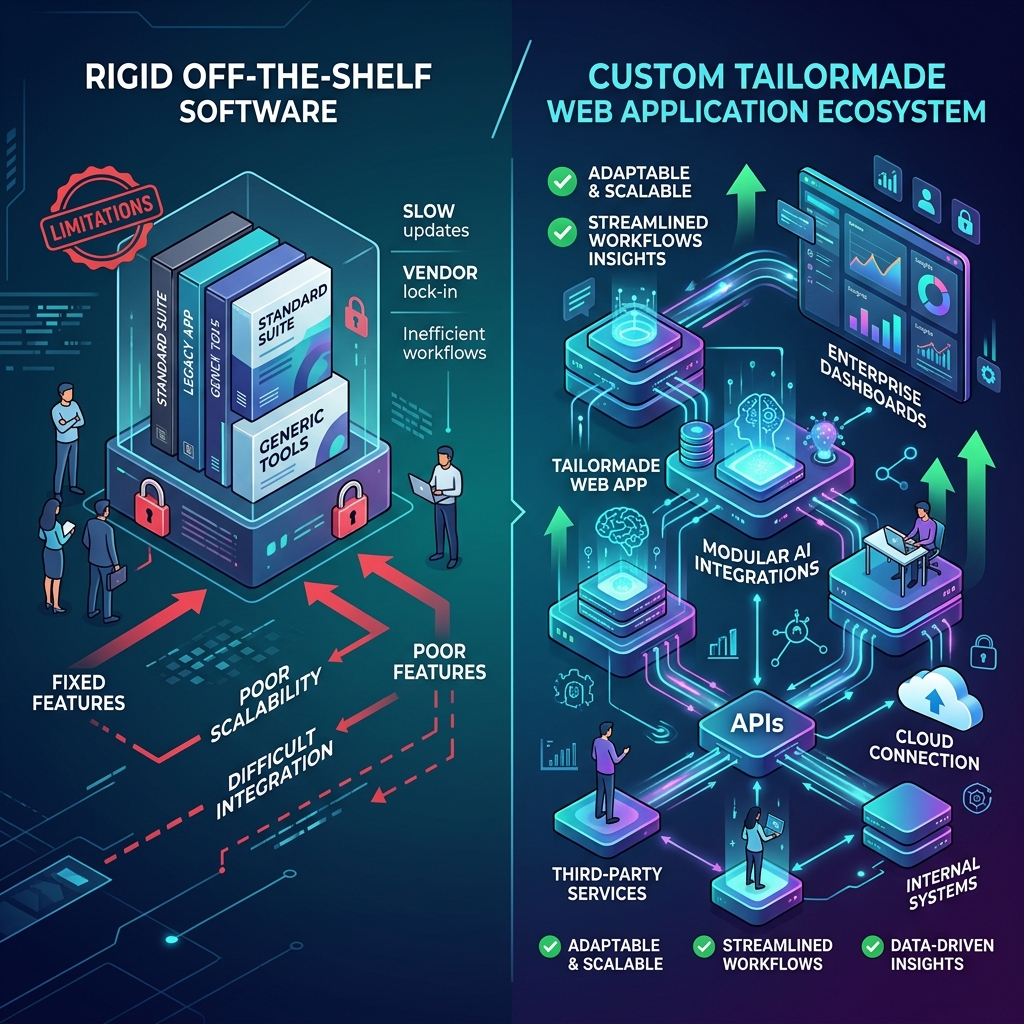
Why Businesses Are Moving from Off-the-Shelf Software to Custom Applications in 2026
Businesses are under constant pressure to work faster and adapt. Learn why organizations are switching from generic off-the-shelf software to custom applications built specifically around their workflows, AI, and growth plans in 2026.
Read More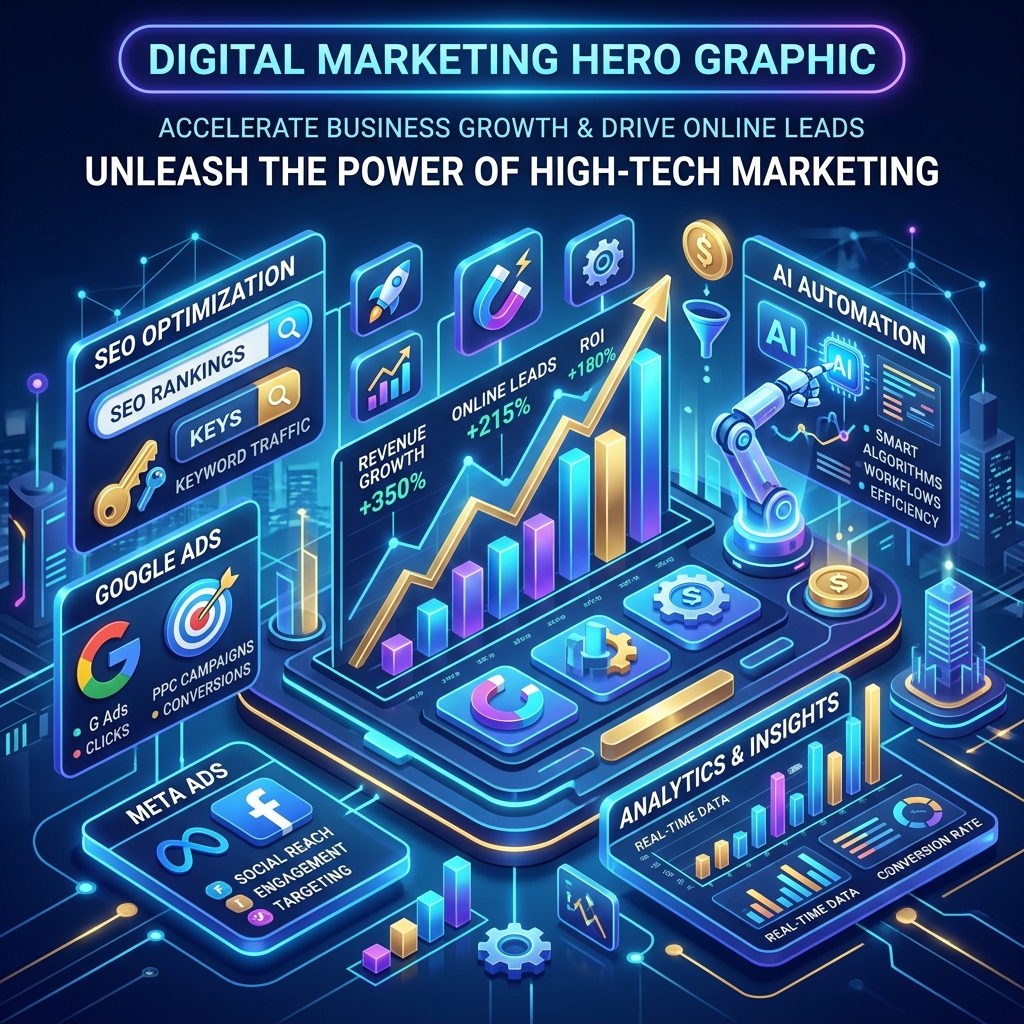
Digital Marketing: How to Get More Leads, Customers & Sales Online
Not getting enough leads from your website? Discover how a results-focused digital marketing strategy combining SEO, Google Ads, Meta Ads, AI, and WhatsApp automation turns online search intent into measurable business growth.
Read More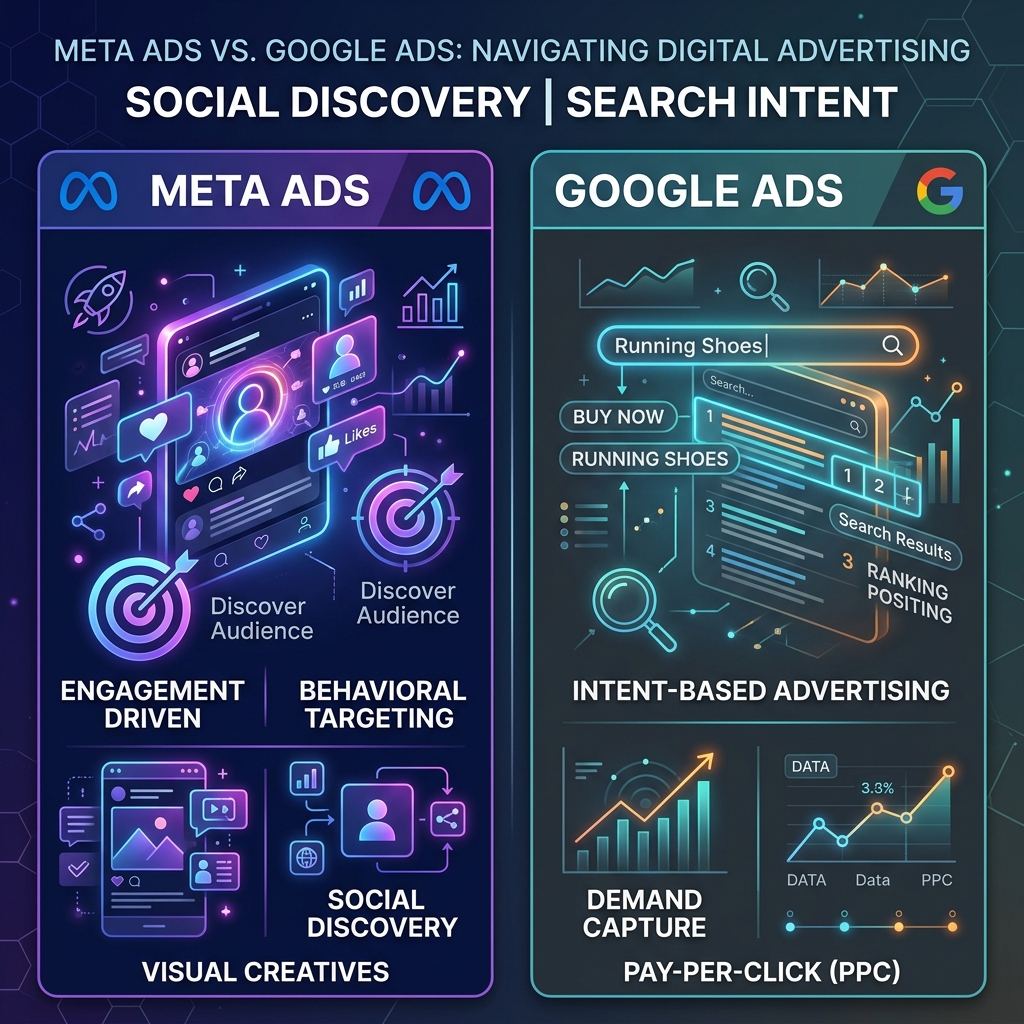
Meta Ads vs Google Ads: Which Advertising Platform Is Right for Your Business?
Choosing the right advertising platform is essential for achieving your marketing goals. Compare Meta Ads and Google Ads based on targeting, cost, intent, and business objectives to find the best fit.
Read More