Why Businesses Are Replacing Traditional Systems with AI-Powered Custom Applications in 2026
Why Businesses Are Replacing Traditional Systems with AI-Powered Custom Applications in 2026
Businesses are generating more data, managing more customer interactions, and operating across more platforms than ever before. Yet many organizations still depend on spreadsheets, disconnected software, manual approvals, and outdated systems.
These traditional methods create delays, increase operational costs, reduce visibility, and limit growth.
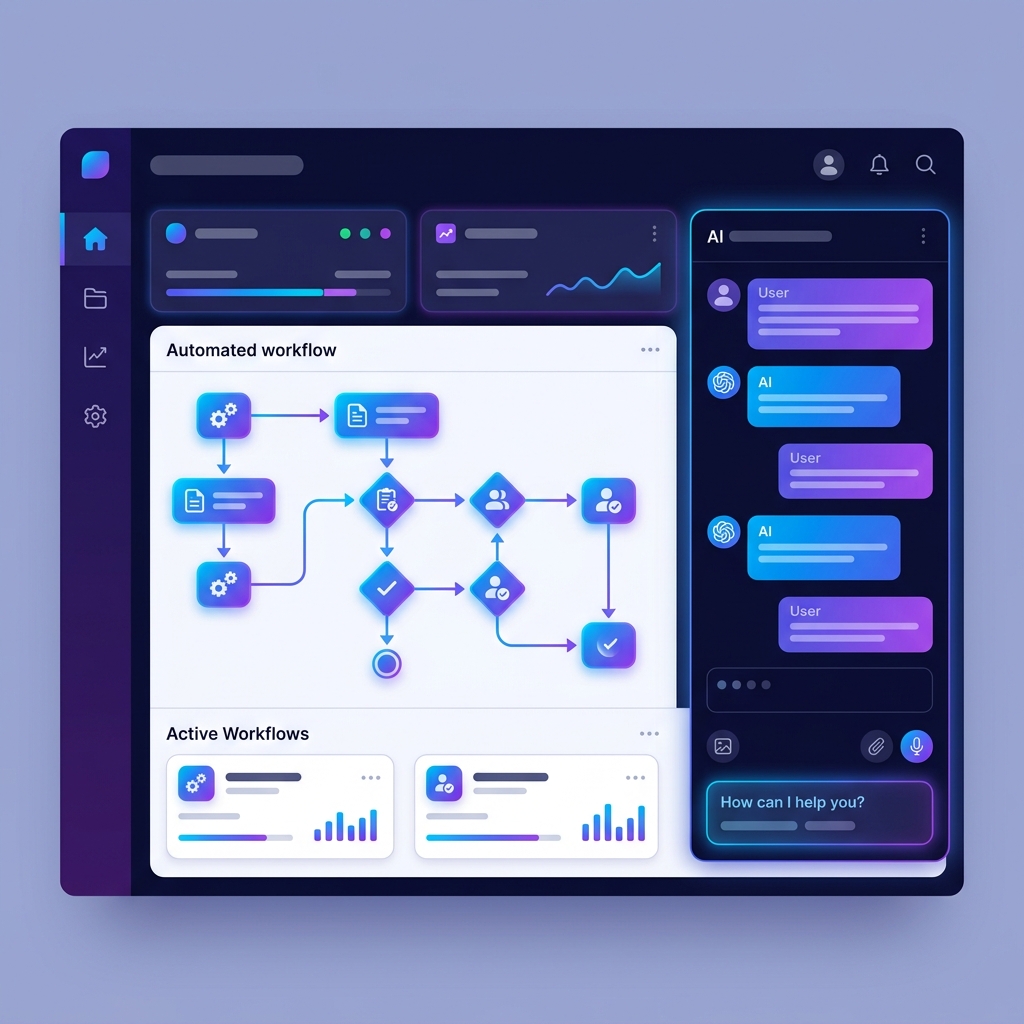
To stay competitive, companies are moving toward AI-powered custom applications—business software built specifically for their workflows and enhanced with automation, intelligence, and real-time decision support.
This shift is not simply about adopting technology. It is about building systems that help businesses move faster, serve customers better, and scale efficiently.
Why Traditional Business Systems Are Becoming a Growth Barrier
Many businesses begin with simple tools because they are affordable and easy to implement. Examples include:
- Spreadsheets for operations
- Generic CRM platforms
- Multiple disconnected applications
- Manual reporting processes
Initially, these tools work. But as business grows, problems begin to appear. Common challenges include:
- Duplicate data
- Slow approvals
- Reporting delays
- Poor collaboration
- Limited customization
- Increased operational effort
Over time, employees spend more time managing systems than growing the business.
What Are AI-Powered Custom Applications?
AI-powered custom applications are software platforms designed around specific business processes and enhanced with intelligent capabilities.
Unlike standard software, custom applications adapt to business requirements instead of forcing businesses to adapt to software limitations.
Artificial intelligence adds another layer of capability. These systems can:
- Automate repetitive work
- Predict outcomes
- Analyze behavior
- Generate insights
- Improve customer interactions
The result is smarter business execution.
Why Businesses Are Moving Toward Custom Applications
1. Every Business Operates Differently
No two organizations manage operations exactly the same way. Pre-built software often includes:
- Unused features
- Workflow restrictions
- Integration limitations
Custom applications eliminate unnecessary complexity. Examples:
- Custom CRM systems
- Internal operation portals
- Customer service platforms
- Approval management systems
Businesses gain more control over execution.
2. AI Reduces Manual Work
Manual processes consume time and create errors. AI improves efficiency by automating activities such as:
- Customer Communication: Automatic replies and intelligent routing.
- Data Processing: Faster information handling.
- Reporting: Instant business summaries.
- Decision Support: Recommendations based on business data.
Teams can focus more on growth activities.
3. Better Customer Experience Creates Competitive Advantage
Customers expect:
- Fast responses
- Personalized experiences
- Simple interactions
Traditional systems often struggle to deliver this consistently. AI-powered applications improve customer experience through:
- Personalized recommendations
- Faster support
- Automated service workflows
- Real-time engagement
Customer satisfaction becomes easier to maintain at scale.
Key Features Businesses Should Look For
When building custom applications, businesses should prioritize:
- Scalability: Support future growth.
- Integration: Connect existing systems.
- Security: Protect business information.
- Automation: Reduce repetitive tasks.
- Analytics: Enable faster decisions.
- Mobile Accessibility: Support operations anywhere.
These features help ensure long-term value.
Industries Leading This Transformation
Several industries are accelerating adoption:
- Manufacturing: Production visibility and workflow automation.
- Healthcare: Process optimization and service management.
- Financial Services: Risk analysis and operational efficiency.
- Retail: Customer engagement and personalization.
- Professional Services: Automation and project visibility.
The common objective is efficiency and scalability.
Custom Applications vs Off-the-Shelf Software
| Factor | Off-the-Shelf | Custom Application |
|---|---|---|
| Flexibility | Limited | High |
| Integration | Moderate | Strong |
| Customization | Restricted | Full |
| Scalability | Platform dependent | Business driven |
| Competitive Advantage | Lower | Higher |
Custom applications often create greater long-term value.
The Role of Data in AI-Powered Applications
Data has become one of the most valuable business assets. AI transforms raw information into:
- Business insights
- Predictive forecasts
- Performance analysis
- Customer intelligence
Organizations that use data effectively make faster and better decisions.
Common Mistakes Businesses Should Avoid
Many digital initiatives fail because of:
- Choosing technology before defining objectives
- Automating inefficient processes
- Ignoring integration planning
- Underestimating user adoption
Technology should support business strategy.
What Businesses Should Prepare for in 2026
The next generation of business systems will include:
- AI-driven workflows
- Predictive operations
- Intelligent automation
- Unified customer experiences
- Connected business ecosystems
Organizations adopting these changes early may gain stronger operational advantages.
Conclusion
AI-powered custom applications are becoming more than a technology trend. They represent a new way of operating.
Businesses that replace fragmented systems with intelligent, connected platforms improve efficiency, increase agility, and create better experiences for both teams and customers.
The future belongs to businesses that build systems around how they work—not businesses that limit themselves to how software works.
About the Author
Rajesh Kumar is a senior engineering contributor and technology consultant at SoftClinch, focusing on custom development implementations.
Need expert solutions?
Discuss how our team can help you automate workflows, integrate SAP systems, customize applications, and accelerate organic visibility.
Schedule ConsultationRelated Articles
Why Businesses Are Moving from Off-the-Shelf Software to Custom Applications in 2026
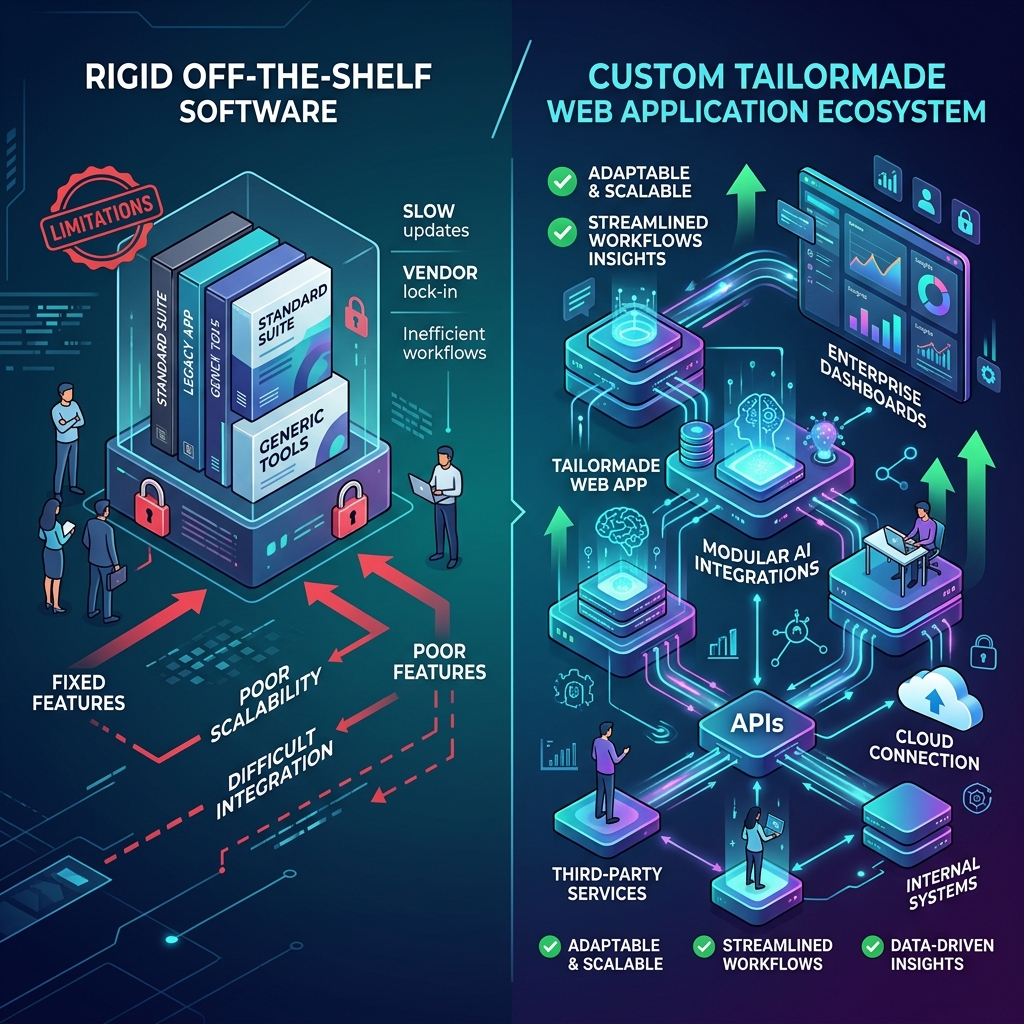
Businesses are under constant pressure to work faster and adapt. Learn why organizations are switching from generic off-the-shelf software to custom applications built specifically around their workflows, AI, and growth plans in 2026.
Read More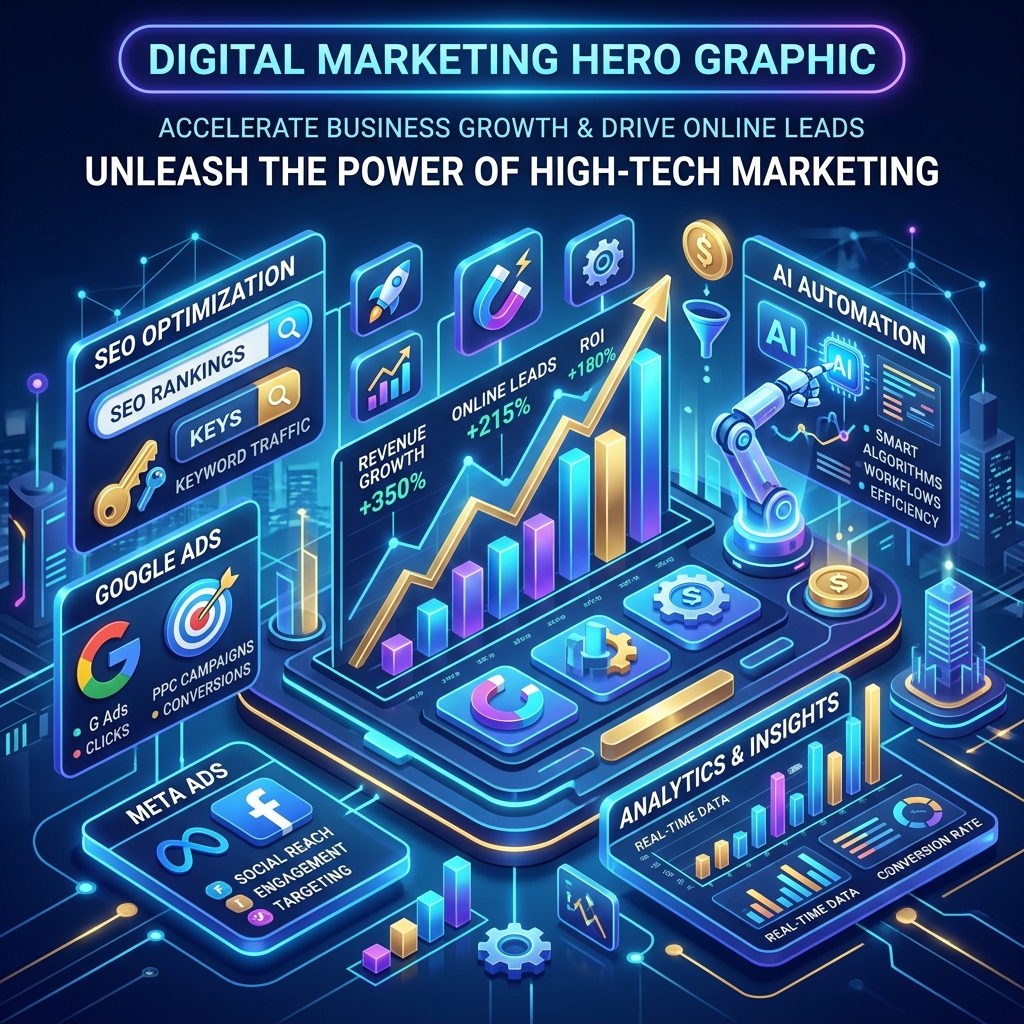
Digital Marketing: How to Get More Leads, Customers & Sales Online
Not getting enough leads from your website? Discover how a results-focused digital marketing strategy combining SEO, Google Ads, Meta Ads, AI, and WhatsApp automation turns online search intent into measurable business growth.
Read More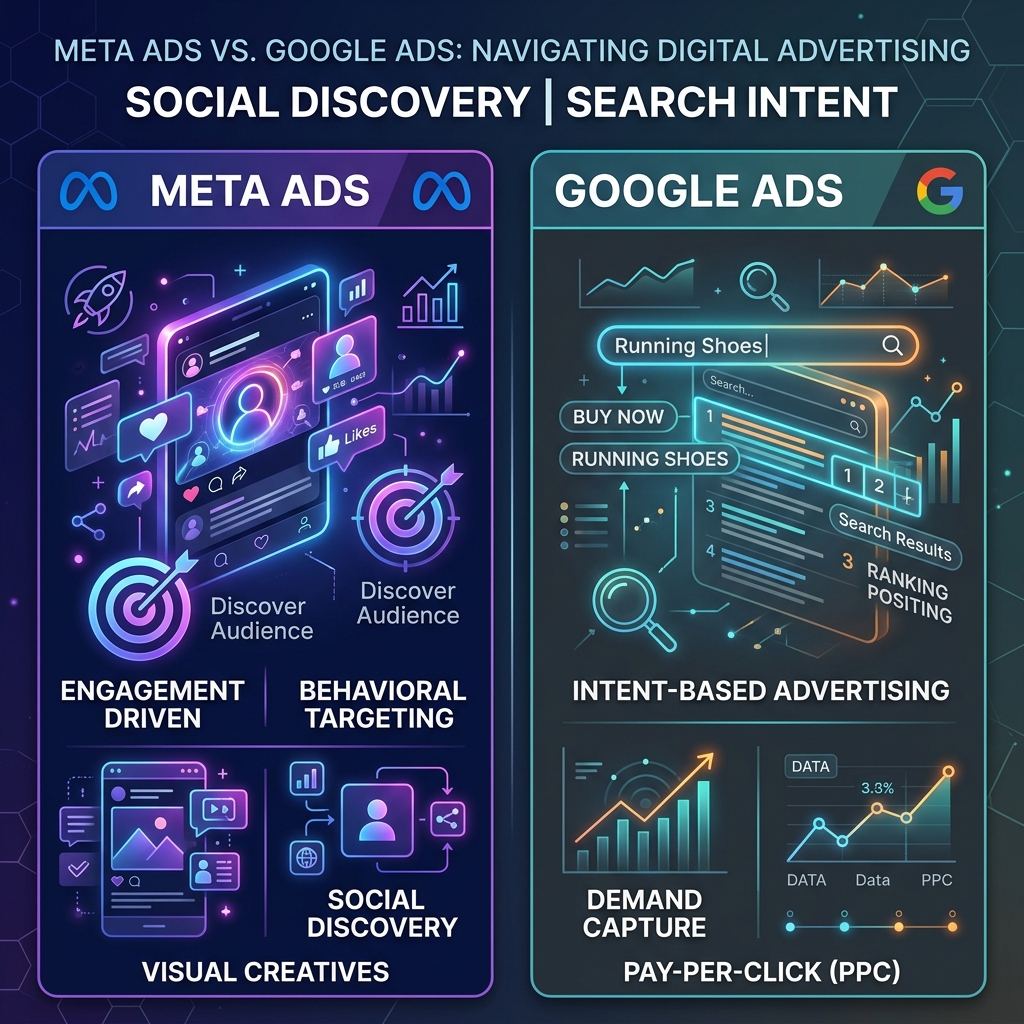
Meta Ads vs Google Ads: Which Advertising Platform Is Right for Your Business?
Choosing the right advertising platform is essential for achieving your marketing goals. Compare Meta Ads and Google Ads based on targeting, cost, intent, and business objectives to find the best fit.
Read More